Local Government
Albany
Region
Great Southern
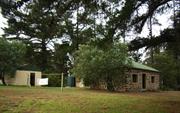
41 Myola Drive Kalgan
Douglas Heritage
Glenelg
Myola
Albany
Great Southern
| Type | Status | Date | Documents |
|---|---|---|---|
| Heritage List | Adopted | 27 Oct 2020 |
| Type | Status | Date | Documents |
|---|---|---|---|
| RHP - Does not warrant assessment | Current | 30 Jul 2010 |
| Type | Status | Date | Grading/Management | |
|---|---|---|---|---|
| Category | ||||
| Local Heritage Survey | Adopted | 27 Oct 2020 | Considerable | |
Douglas House has cultural heritage significance for the following reasons: The place has been in the ownership of the Douglas family since 1891. William Douglas was a guard on the first horse-drawn mail coach between Albany and Perth, then went into boatbuilding on the Kalgan River as well as operating the first regular trading and supply vessels on the South Coast to Fremantle, Esperance, Eucla and Adelaide along with his brothers and sons. He also served on the Albany Council for several years and was recognised for his bravery in the rescue of the crew from the City of York wreck off Rottnest Island in 1899. Douglas Street, South Perth, is named in honour of the Douglas family. The place has aesthetic quality being situated on the banks of the Kalgan River and with its simple yet pleasing design and use of fabric and predominantly natural landscape setting. The place has historic value for its associations with the fruit growing industry in Albany for almost 100 years from the 1890s to the 1980s. The place is believed to be the site near the landing by French explorer Nicolas Baudin in 1803. The place has a connection to the Frenchman Bay Whaling Station (fmr), as William Douglas and his sons were contracted to demolish the buildings and recycled some of the fabric into the cottage.
Some of the notable features of this place include: • Roughcast face stone for external walls • Symmetrical design • Hipped roof clad in corrugated iron (now Colorbond) • Corrugated iron outbuildings/sheds • Landmark quality sitting on top of the river bank overlooking Kalgan River Modifications • Original corrugated galvanised iron replaced with Colorbond • Extensions to rear in flat fibre cement sheeting with brick chimney
The area where Douglas House was built, on the banks of the Kalgan River - and which has the freshwater stream named Baudin Creek, is believed to be the location near where French maritime explorer Thomas Nicolas Baudin (Nicolas) landed and noted in his diary in 1803. Baudin was selected to head a mission to Australia first in 1801 then again in 1803 when he came to Western Australia. Baudin’s expedition ventured to the Albany region including travelling up the Kalgan River. Douglas House was built in 1898 by William Douglas and his sons originally as a two-roomed residence for their fruit farm. William Douglas was born in in England in 1848, the first child born to Thomas and Pheobe Douglas. His family migrated to Western Australia in 1852 originally settling in South Perth; Douglas Street named after the Douglas family. William was married to Emma Matilda Barrett at the old Wesley Church, Perth, on 5 July 1868. After their marriage, William and Emma moved to Albany where William became a guard in the first horse-drawn mail coach between Albany and Perth. William and Emma had six sons: William Arthur, Ernest Albert (Burt), Edward Enoch, Thomas Edgar, Percy Melville and Clement. With strong sea-faring routes, in 1869 William had started building and restoring boats on the banks of the Kalgan River, at Killarney, halfway up the Kalgan River, where he built his first residence. William and his son Edward operated the first steam passenger cruise that ran from the Port in Albany. Most of his family had also since moved to Albany and involved in the martime industry. William purchased other ships and with his younger brother, Frederick, operated the first regular trading and supply vessels on the South Coast to Fremantle, Esperance, Eucla and Adelaide. Frederick lived in the Douglas’ town house in Albany (see Douglas’ House, 135-137 Brunswick Road). William and his son Edward had begun clearing as yet unsurveyed land on the banks of the Kalgan River in 1891. With the area being ideal for fruit growing, the Douglas’s planted an orchard, the Kalgan River being ideal for transporting the produce to market. William other sons, Thomas and Percy, also later helped with clearing and expanding the orchard. They transported the fruit to Albany by using lighters on the banks of the river and using a winch to load the produce. In 1898, Edward had married and lived in the two-room limestone cottage built on the property, originally named “Myola”. They did not own the property at this time as the land had yet to be formerly surveyed and subdivided. In 1899, William was in Fremantle when he was involved in the rescue of the crew from the wrecked City of York at Rottnest and was recognised for his bravery by the Royal Humane Society. William also served on the Albany Council for several years from 1888. In 1905, the Kalgan property that had been settled on and improved by the Douglas family was formerly granted to William once the blocks had been surveyed. In 1912 William transferred the property to Edward. Another residence was built by William on the Douglas’ Kalgan property, to the east of “Myola”, in 1915-1916 and was named Maitland. This is where Burt Douglas and his wife Charlotte lived with their family. In 1923 the Douglas family were awarded the tender to acquire/remove all the buildings and other infrastructure left at the Frenchman Bay Whaling Station (fmr) which had closed in 1915. Materials from the station were used to finish “Myola” which was extended with two bedrooms to the river frontage end and to the rear with flat cement (asbestos) sheeting to accommodate a kitchen, dining and bathroom and a brick chimney. The whaling station materials were also used to construct the fruit packing shed. William and Emma Douglas retired to Perth (Bedfordale) Emma passing away in 1929 and Walter in 1932. When Edward passed away in 1948, the property passed to his sons Walter and Edward, then in 1949 ownerships was transferred to Walter and his other brother William. “Myola” was then renamed “Glenelg”. In 1962, the property was transferred to Ray Douglas. Over the years, the orchards had gradually declined and become unviable by the 1980s. The property is still owned by the Douglas family (Ray) in 2015 and now called Douglas House.
Integrity: High Authenticity: High/Moderate
Good
| Ref ID No | Ref Name | Ref Source | Ref Date |
|---|---|---|---|
| List of Classified Places: Heritage Assessment, National Trust of Australia (WA), 2010 | |||
| Ray Douglas, owner |
Individual Building or Group
| Epoch | General | Specific |
|---|---|---|
| Present Use | RESIDENTIAL | Single storey residence |
| Original Use | RESIDENTIAL | Single storey residence |
| Style |
|---|
| Vernacular |
| Type | General | Specific |
|---|---|---|
| Other | STONE | Limestone |
| Roof | METAL | Corrugated Iron |
| Other | STONE | Other Stone |
| General | Specific |
|---|---|
| DEMOGRAPHIC SETTLEMENT & MOBILITY | Land allocation & subdivision |
This information is provided voluntarily as a public service. The information provided is made available in good faith and is derived from sources believed to be reliable and accurate. However, the information is provided solely on the basis that readers will be responsible for making their own assessment of the matters discussed herein and are advised to verify all relevant representations, statements and information.