Local Government
Albany
Region
Great Southern
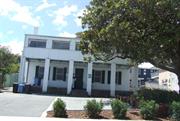
28-30 Stirling Terrace Albany
Belle-vue
Edward House
Hassell House
Moir House
Toc H Canteen
Albany
Great Southern
Constructed from 1858
| Type | Status | Date | Documents |
|---|---|---|---|
| Heritage List | Adopted | 27 Oct 2020 |
| Type | Status | Date | Documents |
|---|---|---|---|
| RHP - Does not warrant assessment | Current | 24 Nov 2023 |
| Type | Status | Date | Grading/Management | |
|---|---|---|---|---|
| Category | ||||
| Register of the National Estate | Permanent | 30 May 1995 | ||
| Uniting Church Inventory | Completed | 01 Oct 1996 | ||
| Local Heritage Survey | Adopted | 27 Oct 2020 | Considerable | |
| Municipal Inventory | Adopted | 30 Jun 2001 | Category B | |
The following has been extracted from ‘Norman House and Cheyne’s Stables and Outbuilding’, Conservation Plan [Farrow/Chinnery, 2010] and so includes both places. Norman House and Cheyne’s Stables and Outbuilding, a two storey rendered painted granite and brick building with a corrugated iron roof in the Victorian Georgian style completed in c.1858, and a single storey brick outbuilding with a corrugated iron roof in the Vernacular style built in the mid-to-late-1830s has cultural heritage significance for the following reasons: Norman House is a rare, substantial, well executed and elegant example of a two storey Victorian Georgian style residence of granite and brick construction, albeit obscured by the present front balcony, and is one of very few two storey residences designed in this style in Western Australia where it is an early example of this style, and Cheyne’s Stables and Outbuilding is one of the earliest surviving buildings at Albany and a rare surviving example in the region of a 1830s stables and outbuilding. The place evidences the lifestyle of one of Albany’s earliest and most successful European settlers, George Cheyne, and the substantial proportions and solid construction of Norman House illustrate the types of houses aspired to by the middle class, of which it is the most substantial of the early examples in Albany, and the solid brick construction of Cheyne’s Stables and Outbuilding also illustrates Cheyne’s ability and aspiration. The place is a landmark in the residential part of Stirling Terrace. The place is highly valued by the community for its associations with the early history of Albany especially early settler George Cheyne, and the Hassells, for its uses under Toc H (1930s), as a high school boys’ hostel (1946-63), and a guest house since 1964, and for its aesthetic qualities. The place is associated with George Cheyne, for whom it was built, William Carmalt Clifton, John Hassell and his family, particularly his daughter, Ellen Belinda, and her husbands, Captain Peter Nicholson and Frank Rawling Dymes, Miss Annie Dymes, Toc H, and John Norman in whose honour it was renamed by the Methodist Church. The oak at the place is one of the oldest surviving oak trees in the State.
Some of the notable features of this place include: • Set back from road behind circular driveway and mature trees • Tree of specific note - Magnolia • Two stories with verandah Some obvious modifications include: • Verandah replacement 1931 • Enclosure to the upper storey verandah • Boxed pillars that dominate façade • Metal screens on windows • Total change from Victorian Georgian style facade • UWA Student housing development – 3 two storey buildings on east of the lot
The following has been mostly extracted from ‘Norman House and Cheyne’s Stables and Outbuilding’, Conservation Plan [Farrow/Chinnery, 2010]. Norman House, along with Cheyne’s Stables and Outbuilding, was constructed for George Cheyne and his wife Grizzel (Grace) in c1858. Norman House is a substantial two storey rendered house in the Victorian Georgian style, located in a prominent position on Stirling Terrace, Albany. It is currently used as a guest house. George and Grace (nee Moir) Cheyne were in the first group of ‘free’ settlers to move from Perth to Albany in November 1831 and became one of among the most successful pioneers of this era. Cheyne also encouraged his wife’s family, the Moirs, to emigrate from England and sponsored them in their early setting up days. George Cheyne led developments in whaling, wool, sandalwood exports, general imports and grazing. He operated his own seaport at Cape Riche. He obtained a number of Lots around the Albany jetty, some of which were on the beach front below Stirling Terrace. Norman House and Cheyne’s Stables and Outbuilding are located on Lot 1, which was created from the former suburban Lots S 14 and S13. The two buildings are located on the former Lot S14. From 1842, Cheyne had developed a substantial farm and port at Cape Riche. The farm, “Bonnington Braes,” is now known as the Moir homestead, after the relatives who inherited it (the Cheynes were childless but had an adoptive daughter who married one of Grace’s nephews, Andrew Moir). Cheyne’s business interests in general were extensive and diverse, and included whaling in the Cape Riche area and sandalwood to the north of Cape Riche around the Pallinup River, where he also developed properties with some of his nephews. Initially intended to be a single storey building, Norman House ended up being two storeys. It was a very substantial and elegant residence, in the Victorian Georgian style, with a central front door on each level flanked by pairs of double hung timber sash windows. The outer walls were constructed of 450 mm thick granite with brick edgings and were stuccoed and the stucco indented with ashlar moulding. The front façade had a graceful first floor balcony. The Cheynes named the house Belle-vue as it had uninterrupted views of Princess Royal Harbour and this was the name it was known by until the 1930s. Cheyne left Albany in 1860 to reside in England and died in Scotland in 1869. In 1865, Norman House and Cheyne’s Stables and Outbuilding on Lot 14, together with the adjacent Lot 13, were purchased by John Hassell and on Hassell’s death in 1883, passed to his daughter, Ellen Belinda. She married Captain Peter Hay Nicholson, and their annual ball was a highlight of the Albany social calendar. While this ball was held at the Albany Town Hall, it is possible that the large open space added at first floor level at the rear of the house, may have been constructed at this time. When Ellen died in 1913, her properties passed to her second husband, lawyer Frank Rawling Dymes. The dwelling continued to change hands over the years and in World War I (when it was known as Edward House it was used for war servicemen’s rest and recreation. After Dymes’ death in 1921, the properties passed to his sister, Annie. In 1930, during the Depression, Annie donated them to Toc H, a charity and allied servicemen’s club (Toc H stands for Talbot House) launched in Britain during WWI particularly to help members of the armed forces. In 1931, the original verandah was removed and replaced with a wider enclosed one supported on thick brick piers, and the fenestration to the first floor of the front facade was altered considerably. In 1946 the Methodist Church purchased the properties and converted it to a Boys’ Hostel. Cheyne’s Stables and Outbuilding was used as a recreation area during this time and brick toilets were added to the east end of this building. The Hostel was named ‘Norman House’ in honour of John Norman by the West Australian Methodist Conference in recognition of his untiring, unfailing work for the youth of Albany. ‘Young people were his first and ardent interest’. John Norman came from a pioneering family who first came into the district in 1837. He grew up with strong role models of community citizenship. At the age of 16 he went into a cadetship at the Post Office but later went onto to work in private enterprise. In c1908 John and his brother Arthur purchased and redeveloped the Albany newsagency and Norman Bros became an integral part of Stirling Terrace. Norman went on to hold many public positions in Albany. He was the Chairman of the Albany Road Board and later Mayor, President of the P&C and Agricultural Society, filled every executive position in the Methodist Church at some time or another and was active in a large number of sports clubs as well. In a report on the property printed in the Albany Advertiser in 1963 the writer said: Norman House bears the hall mark of having been used for some time as a public utility. Gone are the six slender wooden posts, replaced by heavy brick pillars, gone the dainty wooden railings that edged the downstairs verandah, the bird bath, the silver birch, the glorious rose gardens, the pond always filled with floating lillies, gone the four Norfolk pine trees, one placed at the edge of each corner of the house, gone the fruit and almond trees. Remaining is a glorious magnolia tree at the front of the house and at the rear one of the five English Oak trees, a very king among trees of its kind alone, near the one time stables. The hostel at Normal House was closed in 1962 and moved to the old Government Hospital (Vancouver Arts Centre) leaving Norman House vacant for a period. In 1999 the house was used for commercial bed and breakfast accommodation. Bathrooms were introduced to the major spaces in the 1980s and 1990s, including some ensuite bathrooms. The magnolia tree described in the newspaper in 1963 still stands in 2017.
Integrity: High/Moderate Authenticity: Moderate
Good
| Ref ID No | Ref Name | Ref Source | Ref Date |
|---|---|---|---|
| Heritage TODAY Site visit and Assessment 1999. | |||
| Norman House and Cheyne’s Stables and Outbuilding, Conservation Plan, Lynne Farrow architect & Robin Chinnery historian, 2010. | |||
| Australian Heritage Commission Assessment of Cheyne’s Cottage 1994 | |||
| The Albany Advertiser 26 February 1963, Article written by Mavis Verschuer. | |||
| Town of Albany Heritage Survey 1994. |
Individual Building or Group
| Epoch | General | Specific |
|---|---|---|
| Present Use | COMMERCIAL | Other |
| Other Use | MILITARY | Other |
| Other Use | RELIGIOUS | Housing or Quarters |
| Original Use | RESIDENTIAL | Two storey residence |
| Style |
|---|
| Victorian Georgian |
| General | Specific |
|---|---|
| SOCIAL & CIVIC ACTIVITIES | Religion |
| SOCIAL & CIVIC ACTIVITIES | Institutions |
| OUTSIDE INFLUENCES | World Wars & other wars |
| DEMOGRAPHIC SETTLEMENT & MOBILITY | Settlements |
| SOCIAL & CIVIC ACTIVITIES | Community services & utilities |
| PEOPLE | Early settlers |
This information is provided voluntarily as a public service. The information provided is made available in good faith and is derived from sources believed to be reliable and accurate. However, the information is provided solely on the basis that readers will be responsible for making their own assessment of the matters discussed herein and are advised to verify all relevant representations, statements and information.