Local Government
Busselton
Region
South West
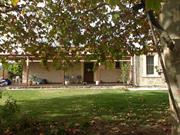
27 Georgette St Busselton
Early Cammilleri Residence
Busselton
South West
Constructed from 1903, Constructed from 1896
| Type | Status | Date | Documents |
|---|---|---|---|
| Heritage List | Adopted | 16 Oct 2024 | |
| Heritage List | YES | 13 Aug 2014 | |
| State Register | Registered | 08 Dec 2006 | HCWebsite.Listing+ListingDocument, HCWebsite.Listing+ListingDocument |
| Type | Status | Date | Documents |
|---|---|---|---|
| (no listings) |
| Type | Status | Date | Grading/Management | |
|---|---|---|---|---|
| Category | ||||
| Register of the National Estate | Indicative Place | |||
| Classified by the National Trust | Recorded | 02 Feb 1976 | ||
| Municipal Inventory | Adopted | 13 Aug 2014 | Category 1 | |
| Municipal Inventory | Adopted | 20 Jun 1996 | Category 1 | |
| Local Heritage Survey | YES | 16 Oct 2024 | Category 1 | |
• St Davitt’s is a fine example of a Federation Queen Anne style residence, which retains most of its original external features and the intended qualities of the internal spaces. • St Davitt’s provides visual contrast and adds to the visual complexity of Busselton as one of a number of places in the town that were originally located in substantial landscape settings, but which over time, have been eroded by urban development. • St Davitt’s is a substantial Federation period residence built in 1896 as the family home for a successful and well-known prospector and typifies the type and standard of accommodation to which such people aspired in this period, and the desire for a coastal retreat from the goldfields. • St Davitt’s was built as a suburban residence in Busselton at a time where there was considerable development and building activity in the town, which was fast developing as both a holiday and a Trade Centre following the Western Australian gold boom period and the opening of the railway to the town. • St Davitt’s was built for well-known prospector F.W.P. Cammilleri (Mayor of Busselton, 1904-07), following his discovery of the renowned lode at Brown Hill that became known as the Oroya Shoot, and for his wife, Kate Bayliss Cammilleri (nee Layman) a descendant from the earliest European settlers in the Busselton district and was their family home until their deaths in 1943 and 1946 respectively. The residence continued to be owned and occupied by members of the Cammilleri family until 1959. • St Davitt’s was built by well-known Busselton builders Hough and Donald, who together and individually were responsible for numerous notable projects in the Shire of Busselton and elsewhere, including Caves House (1902, 1938) and extensions to the Busselton Jetty, and is a good example of their residential work. • St Davitt’s was owned and occupied from 1959 to 1986, by members of the medical profession who played a significant part in the lives of the community, namely Dr. A.G. Hemsley (1959-62), Ailsa Carrick (1962-72) and Meave Monks (1962-86). • St Davitt’s is a good example of a Federation Queen Anne style residence designed and built to superior standards, in which local materials were used, in particular stone quarried nearby and local timber, probably brought from Yelverton’s Mill at Quindalup. • St Davitt’s has social significance to the community of Busselton as one of the most substantial and best-known residences, built in the period of rapid development in the town during the late 1890s, and for its association with F.W.P. Cammilleri and the Cammilleri family. The inclusion of St Davitt’s in the Shire’s Municipal Heritage Inventory is a further measure of the significance of the place. • St Davitt’s contributes to the community’s sense of place as indicated by it being generally known as ‘Cammilleris’ place’ nearly fifty years after the last Cammilleri moved out, reflecting its long association with this family.
The original 1896 St. Davitt’s residence is a single‐Storey random‐coursed rubble limestone building, with an ‘M’ forma roof, covered with corrugated galvanized iron and a corrugated iron‐roofed verandah, in the Victorian Georgian style, set in a simple domestic‐style garden, comprising lawns and mature trees The rear addition, constructed in 1903, is a harmonious addition to the original 1896 section of the residence. It consists of a hipped roof house with a surrounding dropped pitch verandah with an iron lace valance and brackets. There is a large brick addition to the south of the main house
St. Davitt’s was built, in 1896, by local Busselton builders Hough and Donald, for Frederick William Ponsonby Cammilleri, as his family residence. Cammilleri was one of the best‐known and most successful prospectors in Western Australia, having discovered the rich lode at Brown Hill, Kalgoorlie. F.W.P. Cammilleri (1861-1943) married Kate Bayliss Layman (1867-1946) in 1895 which is likely to be the reason for the construction of the new home. The origin of the name St Davitt's is not known. The same builders made additions to the rear, probably in 1903. There were only relatively minor changes until the late twentieth century, when further additions were made to the rear, early outbuildings were removed, and new outbuildings were erected. The place remained in the family ownership until 1958.Originally the house addressed Duke Street and was located within a much larger lot which included outbuildings and mature trees. Georgette street was created in the mid 1950s, and the original parcel of land began to be subdivided for new lots in the 1960s. Aerial photographs indicate that the most significant additions to the south of the original residence was constructed in the 1990s. Since that time there have been no major additions and the form and extent of the original residence can be readily determined.
The original intent is readily legible, and the place has continued in use as a residence since its completion in 1896. Each of the major stages of development are distinguishable, so that the evolution of the residence is readily apparent. Overall, the place retains a high degree of integrity. Much of the original fabric remains in place and intact. Some detail has been lost and some rooms have been altered for alternative uses. Most of this change has occurred in the late twentieth century. Fabric losses include decorative treatments to the roof, verandah detailing, the foundation stone, stone- construction fireplaces, as well as the loss of elements such as the tennis courts, windmill, water tank and flagpole. The fabric that remains in the original 1896 section of the residence is substantially authentic. Overall, the place retains a moderate, to high, degree of authenticity.
Good
| Ref ID No | Ref Name | Ref Source | Ref Date |
|---|---|---|---|
| St. Davitt's residence, Busselton | Conservation Plan | 2005 |
| Ref Number | Description |
|---|---|
| PN047 | COB |
| 533661 | Landgate Pin |
| 100052031 | COB Property ID |
| Library Id | Title | Medium | Year Of Publication |
|---|---|---|---|
| 9168 | St. Davitt's - final report. | Conservation works report | 0 |
| 7207 | St. Davitt's residence, Busselton : conservation plan. | Heritage Study {Cons'n Plan} | 2005 |
Individual Building or Group
| Epoch | General | Specific |
|---|---|---|
| Original Use | RESIDENTIAL | Single storey residence |
| Present Use | RESIDENTIAL | Single storey residence |
| Style |
|---|
| Federation Queen Anne |
| Type | General | Specific |
|---|---|---|
| Roof | METAL | Corrugated Iron |
| Wall | STONE | Limestone |
| General | Specific |
|---|---|
| OCCUPATIONS | Domestic activities |
This information is provided voluntarily as a public service. The information provided is made available in good faith and is derived from sources believed to be reliable and accurate. However, the information is provided solely on the basis that readers will be responsible for making their own assessment of the matters discussed herein and are advised to verify all relevant representations, statements and information.