

Local Government
Belmont
Region
Metropolitan

72, 73, 74, 76, 77, 78 Toorak Rd Rivervale
76- site only
2nd 28th Battalion Association Housing Scheme
Belmont
Metropolitan
Constructed from 1949
| Type | Status | Date | Documents | More information |
|---|---|---|---|---|
| (no listings) |
| Type | Status | Date | Documents |
|---|---|---|---|
| RHP - Assessment in Progress | Current | 19 Jul 2023 |
| Type | Status | Date | Grading/Management | More information | |
|---|---|---|---|---|---|
| Category | Description | ||||
| (no listings) |
|
||||
· The place is a rare example of a cooperative housing initiative.
· The place represents the measures taken by ex-servicemen to provide houses for themselves and their families following their return from World War Two.
· The place is an example of a successful housing scheme completed prior to the establishment of Western Australia’s first State Housing estate (also in Rivervale, constructed in 1950).
· The place was constructed using locally sourced granite and other readily available materials which were not generally in use by the building industry, and subsequently avoiding the delays caused by material shortages of the 1950s.
· The place is symptomatic of the intensification in the need for housing in Western Australia following the end of World War Two.
· The place is one of only two known residential areas constructed by the 2nd 28th Battalion Association in Western Australia.
· The place is associated with Jack Costello (MBE), who organised the original 2nd 28th Battalion Association Housing Scheme in Kalgoorlie from 1946 to 1948, as well as the Toorak Road Housing Scheme, Rivervale from 1949 to 1957, and lived at No. 77 Toorak Road from its completion in 1957.
· The place is relatively intact and appears to be in good condition, although No. 76 has been demolished and No. 73 redeveloped, 72, 74, 77 and 78 together comprise a significant intact precinct of cooperative-scheme constructed housing.
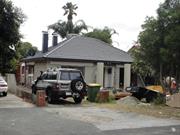
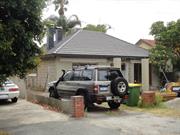
Although the Toorak Road Housing Scheme originally comprised six residences, one, No. 76 was demolished in 2003. The five remaining residences at 72, 73, 74, 77 and 78 Toorak Road are all constructed of granite stone with terracotta tiled roofs, each in a slightly different design. Selected brick was laid in the building corners and window surrounds to form 9 inch quoins into which the granite blocks were set No. 72 appears to have some Art Deco characteristics, including a curved awning shading the front door, curved front steps and a singular circular window. It is likely that these were later additions, as none of the other residences display these characteristics. No. 73 has had substantial modifications, with significant rendering and additions to its street façade as well as retiling of the roof. It also appears that the chimneys have been rebuilt, suggesting significant interior alterations as well. Nos. 74 and 77 appear to have had the fewest modifications, retaining their modest size and original ‘L’ shaped plan.
The five remaining stone residences at 72, 73, 74, 77 and 78 Toorak Road in Rivervale were originally part of group of six houses constructed by returned servicemen under the 2nd 28th Battalion Association Housing Scheme. The 2nd 28th Battalion Association Housing Scheme was established in 1946 in Kalgoorlie, when 22 ex-servicemen who had served under the 2nd 28th Battalion Association; the 24th Tank Attack Association; the Australian Imperial Force; the Royal Australian Navy; and the Royal Australian Air Force and had returned from war and experienced problems obtaining accommodation for themselves and their families. The association was organised by Jack Costello (MBE) with the intention of constructing homes for each of the members and their families, each man contributed £1300 to a mutual fund which purchased land at Salisbury Road in South Kalgoorlie, adjacent to Kalgoorlie Racecourse. Construction began on 20 September 1946. The materials were sourced mainly from declining mining town of Wiluna, supplemented by new asbestos sheeting and plasterboards obtained from the State Housing Commission. Provisions were also made for a recreational centre, trees, parks and hedges. All 22 houses were completed and occupied by March 1948, with the work totalling 15,000 volunteer hours. Once finished, the project was the only fully successful cooperative housing scheme in Australia, and it was reported that it had attracted the interest and enthusiasm of both State and Commonwealth Housing officials.
No. 72, 74, 77 and 78 were all Recommended RHP by City of Belmont 2003 MI. The precinct itself does not have a heritage listing with the City of Belmont (in 2012).
| Name | Type | Year From | Year To |
|---|---|---|---|
| Duncan, Stephen & Merser Architects | Architect | - | - |
| Library Id | Title | Medium | Year Of Publication |
|---|---|---|---|
| 11370 | PUBLIC VERSION: A thematic history of Government Housing in Western Australia | Electronic | 2014 |
Precinct or Streetscape
| Epoch | General | Specific |
|---|---|---|
| Original Use | RESIDENTIAL | Single storey residence |
| Style |
|---|
| Inter-War Art Deco |
| Inter-War California Bungalow |
| Type | General | Specific |
|---|---|---|
| Wall | BRICK | Other Brick |
| Wall | STONE | Granite |
| Roof | TILE | Terracotta Tile |
| General | Specific |
|---|---|
| OTHER | Other Sub-Theme |
| PEOPLE | Local heroes & battlers |
| DEMOGRAPHIC SETTLEMENT & MOBILITY | Government policy |
This information is provided voluntarily as a public service. The information provided is made available in good faith and is derived from sources believed to be reliable and accurate. However, the information is provided solely on the basis that readers will be responsible for making their own assessment of the matters discussed herein and are advised to verify all relevant representations, statements and information.