

Local Government
Carnarvon
Region
Gascoyne

North West Coastal Highway Inggarda
off North West Coastal Highway, 64 kms south of Carnarvon; Lot 415 on Plan 220782
40 Mile Tracks Site
Carnarvon Ajana Track Tank Site
No. 1 Tank
Carnarvon
Gascoyne
| Type | Status | Date | Documents | More information |
|---|---|---|---|---|
| (no listings) |
| Type | Status | Date | Documents |
|---|---|---|---|
| (no listings) |
| Type | Status | Date | Grading/Management | More information | |
|---|---|---|---|---|---|
| Category | Description | ||||
| Municipal Inventory | Adopted | 23 Jun 2015 | Category 5 |
Category 5 |
|
Historic Value – Importance in relation to an event, phase or activity of historic importance in the locality,
Social Value – Importance in contributing to a community’s sense of place.
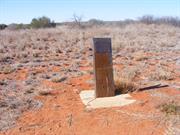
Located 64 kilometres south of Carnarvon, east of the highway. It was a timber and iron construction.
The site was once the site of a water catchment tank which formed part of a chain of tanks along the dusty stretch of road known as the ‘Carnarvon to Ajana’ track. It was known as the ’40 mile Tank’ as its position is 40 miles or 64 kilometres from Carnarvon. However, this site was so much more than a water tank. It acted as a safety net and meeting point for travellers along this once remote and virtually waterless track. Truck drivers in particular would pull up here for a break or to camp on their long lonely journeys. The ’40 mile Tank’ was the first of eight tanks positioned along the track which was cleared in 1930 to allow more direct access to the south and avoid the arduous inland route from Carnarvon to Geraldton via Gascoyne Junction. The tanks were subsequently constructed in the 1930s. Whilst sensible travellers carried water with them, accidents could happen and, with few other travellers on the road, water within walking distance could very well save lives. The tanks were of corrugated iron and timber construction but were later replaced by concrete or steel structures. They held between 13,600 – 22,700 litres of water each, and several sites had two tanks containing up to approximately 45,000 litres of water. As motor transport improved and distances no longer seemed so great or so lonely, the need for the tanks waned. In the mid to late 1960s, the then Main Roads Board had most of the tanks removed. However, the importance of the tanks lives on in the memories of those who once stopped and refreshed themselves from the tanks water. In 1961, the Gascoyne River flooded. The rivers water rose rapidly, charging through the landscape, ripping up its bank, engulfing trees and threatening properties. As the Carnarvon population watch the waters rise, the decision was made to evacuate the township. The ’40 mile Tank’ site was the campground of the evacuated Carnarvon residents. The residents camped there for several days, using the tank’s water. When the river eventually subsided, the community returned to Carnarvon. ’50 mile Tank’ and ’80 mile Tank’ sites are also located within the Shire of Carnarvon. ’50 mile Tank’ was of timber and iron construction whereas ’80 mile Tank’ was a steel frame construction on top of a stony hill. This tank was erected much later than the others in the early 1950s.
HIgh/High
Good
Historic Site
This information is provided voluntarily as a public service. The information provided is made available in good faith and is derived from sources believed to be reliable and accurate. However, the information is provided solely on the basis that readers will be responsible for making their own assessment of the matters discussed herein and are advised to verify all relevant representations, statements and information.