Local Government
Broomehill-Tambellup
Region
Great Southern
30360 Great Southern Hwy Broomehill
Previoulsy noted as being on Jasper Street, Broomehill.
Town Hall, Sheridans Hall
Broomehill-Tambellup
Great Southern
Constructed from 1910 to 1928
| Type | Status | Date | Documents |
|---|---|---|---|
| Heritage List | Adopted | 21 Nov 1996 | |
| State Register | Registered | 04 Nov 2005 | HCWebsite.Listing+ListingDocument, HCWebsite.Listing+ListingDocument |
| Type | Status | Date | Documents |
|---|---|---|---|
| (no listings) |
| Type | Status | Date | Grading/Management | |
|---|---|---|---|---|
| Category | ||||
| Classified by the National Trust | Classified | 01 Jun 2000 | ||
| Municipal Inventory | Adopted | 21 Nov 1996 | ||
| Municipal Inventory | Adopted | 21 Nov 1996 | ||
12413 Broomehill Town Centre Precinct
Broomehill Shire Hall & Road Board Offices (fmr) is in fair condition, although very little maintenance has been carried out on the building for a number of years. Recently a large proportion of the stumps were replaced.
| Library Id | Title | Medium | Year Of Publication |
|---|---|---|---|
| 6709 | Images CD No. 22 : four buildings in Broomehill. | C D Rom | 0 |
| 6708 | Four buildings Broomehill : Broomehill Museum, Broomehill Shire Hall, Broomehill RSL & Citizens' Hall, Broomehill Shire Office : conservation plan. | Heritage Study {Cons'n Plan} | 2003 |
Individual Building or Group
| Epoch | General | Specific |
|---|---|---|
| Original Use | GOVERNMENTAL | Town, Shire or District Hall |
| Present Use | GOVERNMENTAL | Town, Shire or District Hall |
| Original Use | GOVERNMENTAL | Office or Administration Bldg |
| Original Use | SOCIAL\RECREATIONAL | Other |
| Style |
|---|
| Federation Anglo-Dutch |
| Vernacular |
| Type | General | Specific |
|---|---|---|
| Roof | METAL | Corrugated Iron |
| Wall | TIMBER | Other Timber |
| Wall | BRICK | Common Brick |
| Wall | METAL | Other Metal |
| General | Specific |
|---|---|
| TRANSPORT & COMMUNICATIONS | Road transport |
| SOCIAL & CIVIC ACTIVITIES | Sport, recreation & entertainment |
| SOCIAL & CIVIC ACTIVITIES | Community services & utilities |
| SOCIAL & CIVIC ACTIVITIES | Government & politics |
This information is provided voluntarily as a public service. The information provided is made available in good faith and is derived from sources believed to be reliable and accurate. However, the information is provided solely on the basis that readers will be responsible for making their own assessment of the matters discussed herein and are advised to verify all relevant representations, statements and information.
The place is a good example of rural civic architecture in what may be classified as Federation with an interwar addition in Cape Dutch gable style. The predominant feature of three parapeted gables is unusual and possible unique, and this large and distinctive building has aesthetic significance and considerable prominence forming a significant landmark on the main Great Southern Highway. The place is a demonstration of the continued development that occurred in Broomehill as it became a service centre of the district. It has historical and social significance as a place of community gathering and a centre of both official and informal social functions over a period of many years. The well preserved building is in good condition and is an unusual and rare example of this genre. AESTHETIC VALUE The frontage of the Broomehill Shire Hall building is a good but unusual example of architectural style still practised, in the interwar period based on the earlier federation style. It may be described as Federation Freestyle. The style is primarily non-residential and includes among characteristic indicators, parapets with a curvilinear apex. The building, although unusual, is representative of the way that Federation styling was applied in country areas of was and is one of the only few such examples extant. The building’s façade has been well maintained and the original fabric is mostly intact. The place is a significant landmark identifying the township and makes and important contribution to the streetscape with its façade treatment of rendered and painted brickwork and its distinctive gables. The preservation of the place is a demonstration of the appreciation of the aesthetic exhibited by the building and show that it is highly valued by the community. SOCIAL VALUE The place represents a way of life no longer practised, when relatively difficult transportation and communication largely depended on the horse and limited opportunities for business and social gatherings. It demonstrates ways of life in an isolated agricultural community and has strong associations with the development of the Broomehill area. The Hall has provided an important meeting place for the local community over many years and has been a major centre for discussion and decision making regarding the development of the area, as well as a centre for social functions, both formal and informal and a venue for skating, dances and cinema entertainment. RARITY AND REPRESENTATIVENESS The building is representative of architectural style as applied in country areas of W.A. but is probably unique in its manifestation of that style, is one of only a few such examples and is one of the better preserved. CONDITION, INTEGRITY AND AUTHENTICITY This is an authentic building with the original built fabric relatively intact and in excellent condition. The place is a well preserved and maintained example of the genre and is valued as one of Broomehill’s heritage buildings. The building has been only slightly altered internally and its integrity is still very high despite these alterations and some extensions. It has been well maintained so that the building can continue to be effectively utilised and cared for.
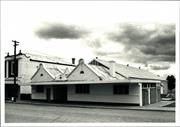
This distinctive and imposing building fronting the Great Southern Highway and the rail line creates a major landmark and, together with the adjacent hotel, is the main identification of the town to passing travellers. The place has a main hall with brick front rooms and the Interwar Architectural style of the frontage is quite striking and unusual. Two main rendered brick gables with curvilinear apexes, reminiscent of Cape Dutch architecture, are linked by a smaller gable of similar shape between them over the central recessed entrance through double timber doors. A gables parapet with no-pointed apex is an important indicator of the style identified by Apperley, Irving and Reynolds as Federation Freestyle and since these three gabled parapets form the predominant feature of the frontage of this building it may be classified in this way. The brick gables which also feature a centrally placed small semi-circular windows, are currently highlighted by being painted white with the cappings picked out in strongly contrasting blue colour. The small central gable carries the date 1928 in raised numerals also picked out in blue. This colour treatment is followed throughout the rest of the exterior and the contrasting colour is used to emphasise the gutters and visually ties the later additions at the right hand end of the façade to the older building. The cement plinth across the front and a horizontal raised moulding below the sills of the timber casement window is also painted blue. The corrugated iron roofs of these 1928 buildings are pierced by three tall rectangular brick chimneys and the top of the original parapet wall also shows through the left gable roof. Behind this front section is the original hall itself which has a simple gable spanning the full width of the building covered by a relatively new metal roof which rises above the front section. The walls of the hall are timber framed clad with corrugated iron externally and plasterboard on the inside. The interior detailing is very plain and basic but in almost original condition with a stage at the far end. Memorial plaques are hung on the walls of the entrance hall.
Assessment:2000 Broomehill (Originally Broome Hill, named after Sir Frederick Napier Broome, Governor of Western Australia) is located on the Great Southern Highway between Katanning and Tambellup in the Great Southern Region, 300 kms south east of Perth. The Great Southern Railway reached Broomehill in 1889, settlement rapidly grew and it became a centre for supplies to the surrounding district. In 1959 the spelling of the town’s name was changed from Broome Hill to one word – Broomehill, and this was gazetted on 16 February. Originally the hall was built I n 1910 by Mr George Green for Mrs Kathleen Sheridan. This became the present shire hall. The Hall was built of galvanised Iron and utilised as a skating rink, dances and a cinema. In 1917 it was acquired by the Road Board and brick additions made to the front in 1928. In the 1960’s the Broomehill Shire Council required more office space than that available in the hall and it was decided that a new shire complex be built on land adjacent to the hall. The new complex opened in 1964.
The original corrugated iron hall built in 1910 had the distinctive brick front section added in 1928 providing offices and a board room for the Roads Board. The fabric of these constructions is relatively intact and in virtually original condition. A toilet block and front awning were added c.1960.
This information is provided voluntarily as a public service. The information provided is made available in good faith and is derived from sources believed to be reliable and accurate. However, the information is provided solely on the basis that readers will be responsible for making their own assessment of the matters discussed herein and are advised to verify all relevant representations, statements and information.
Constructed from 1928, Constructed from 1910
This place is part of the Broomehill streetscape since 1910.
A timber framed, iron clad hall in Federation vernacular style with a Inter-War Anglo-Dutch brick frontage. ARCHITECTURAL STYLE - Inter War Anglo Dutch The hall is a single storey brick building with a CGI roof. The front of the building is very distinctive with a symmetrical rendered facade featuring Dutch Gables on either side of a double door main entry, and a samller gable over the entry section. The 1910 hall is evidence by a high gable roof with vents seen in the gable from street level.
The hall was used as a skating rink, meeting place and for dances, socials and other functions. Was used regularly for most functions in Broomehill until Recreational Centre was built in 1986.
Extent of Original Fabric: 70% Modifications: brick front added in 1928.
Fair
| Owner | Category |
|---|---|
| Shire of Broomehill-Tambellup | Local Gov't |
This information is provided voluntarily as a public service. The information provided is made available in good faith and is derived from sources believed to be reliable and accurate. However, the information is provided solely on the basis that readers will be responsible for making their own assessment of the matters discussed herein and are advised to verify all relevant representations, statements and information.
Cnr Janitor & Davine Sts Broomehill
Police Station and Court House
St Elizabeth of Hungary Anglican Church
Broomehill-Tambellup
Great Southern
Constructed from 1892 to 1953
| Type | Status | Date | Documents |
|---|---|---|---|
| Heritage List | Adopted | 21 Nov 1996 | |
| State Register | Registered | 02 Sep 1997 | HCWebsite.Listing+ListingDocument, HCWebsite.Listing+ListingDocument |
| Type | Status | Date | Documents |
|---|---|---|---|
| (no listings) |
| Type | Status | Date | Grading/Management | |
|---|---|---|---|---|
| Category | ||||
| Municipal Inventory | Adopted | 21 Nov 1996 | ||
| Classified by the National Trust | Classified | 14 Apr 1998 | ||
| Name | Type | Year From | Year To |
|---|---|---|---|
| George Temple Poole | Architect | - | - |
| Library Id | Title | Medium | Year Of Publication |
|---|---|---|---|
| 2486 | St Andrew's Anglican Church Katanning; St Andrew's Hall Katanning; St Peter's Anglican Church Badgebup; St Elizabeth's Anglican Church Broomehill : asessment of buildings and recommendations of work to be done . | Heritage Study {Other} | 1993 |
| 3769 | St Elizabeth's Church, Broomehill Roof Replacement | Heritage Study {Other} | 1998 |
| 9735 | Church of St Elizabeth of Hungary Broomehill: conservation works. | Conservation works report | 2011 |
| 8538 | St Elizabeth of Hungary Anglican Church, Broomehill. | Heritage Study {Cons'n Plan} | 2007 |
Individual Building or Group
| Epoch | General | Specific |
|---|---|---|
| Original Use | GOVERNMENTAL | Police Station or Quarters |
| Present Use | RELIGIOUS | Church, Cathedral or Chapel |
| Style |
|---|
| Vernacular |
| Type | General | Specific |
|---|---|---|
| Wall | BRICK | Rendered Brick |
| Roof | METAL | Corrugated Iron |
| General | Specific |
|---|---|
| SOCIAL & CIVIC ACTIVITIES | Religion |
This information is provided voluntarily as a public service. The information provided is made available in good faith and is derived from sources believed to be reliable and accurate. However, the information is provided solely on the basis that readers will be responsible for making their own assessment of the matters discussed herein and are advised to verify all relevant representations, statements and information.
Constructed from 1953, Constructed from 1892
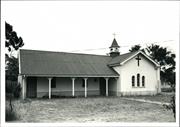
Historic- The Broome Hill Police Station was built in 1892. When the new police station and quarters was built in 1951, the old station was not needed. The anglican Parish purchased the building for 450 pounds in 1952 and with a few alterations, it became a church.
Saint Elizabeth's Anglican Church, the former Police Station and Courthouse, a single-storey brick and iron building. It is one of the oldest buildings in Broomehill and contributes to the community’s sense of place. The altar is constructed of bricks from the old 1884 Eticup Church. The transformation from a police station into a church makes Saint Elizabeth's Anglican Church an uncommon structure.
This Church took it name from St Elizabeth who fed the poor of her country. Her husband was a heathen and had forbidden her to do so . One day she crept out of the palace with a basket of bread for the needy and her husband caught her. Miraculously, when he looked into the basket, it was filled with roses. When Broomehill came into being, there was no church for some years, so with the escalating costs of building a new church, it was more viable to convert the old police building.
Extent of Original Fabric: 60%
Good
| Name | Type | Year From | Year To |
|---|---|---|---|
| George Temple Poole | Architect | 1892 | - |
| Owner | Category |
|---|---|
| Roman Catholic Archbishop of Bunbury | Church Property |
This information is provided voluntarily as a public service. The information provided is made available in good faith and is derived from sources believed to be reliable and accurate. However, the information is provided solely on the basis that readers will be responsible for making their own assessment of the matters discussed herein and are advised to verify all relevant representations, statements and information.
10 Journal St Broomehill
Cnr Journal & India Sts
Broomehill General Store
Broomehill-Tambellup
Great Southern
Constructed from 1911
| Type | Status | Date | Documents |
|---|---|---|---|
| National Heritage List | Nominated | 20 Jan 2006 | |
| Heritage List | Adopted | 21 Nov 1996 | |
| State Register | Registered | 27 Dec 2002 | HCWebsite.Listing+ListingDocument, HCWebsite.Listing+ListingDocument |
| Type | Status | Date | Documents |
|---|---|---|---|
| (no listings) |
| Type | Status | Date | Grading/Management | |
|---|---|---|---|---|
| Category | ||||
| Municipal Inventory | Adopted | 21 Nov 1996 | ||
12413 Broomehill Town Centre Precinct
| Library Id | Title | Medium | Year Of Publication |
|---|---|---|---|
| 7041 | A conservation plan for Jones's Buildings, Broomehill, Western Australia. | Heritage Study {Cons'n Plan} | 2004 |
| 9495 | A report on a conservation work campaign 2006-09 at Jones's Buildings (also known as Jones's Village), 49-50 India Street, Broomehill, WA 6318. | Conservation works report | 2010 |
Individual Building or Group
| Epoch | General | Specific |
|---|---|---|
| Original Use | COMMERCIAL | Shopping Complex |
| Present Use | VACANT\UNUSED | Vacant\Unused |
| Original Use | SOCIAL\RECREATIONAL | Other |
| Present Use | COMMERCIAL | Shopping Complex |
| Original Use | INDUSTRIAL\MANUFACTURING | Bakery |
| Style |
|---|
| Federation Free Classical |
| Type | General | Specific |
|---|---|---|
| Other | METAL | Pressed Metal |
| Roof | METAL | Corrugated Iron |
| Wall | BRICK | Rendered Brick |
| Other | TIMBER | Other Timber |
| General | Specific |
|---|---|
| OCCUPATIONS | Commercial & service industries |
This information is provided voluntarily as a public service. The information provided is made available in good faith and is derived from sources believed to be reliable and accurate. However, the information is provided solely on the basis that readers will be responsible for making their own assessment of the matters discussed herein and are advised to verify all relevant representations, statements and information.
Constructed from 1911
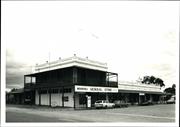
Historic: the only remaining store in Broomehill. Built for MR R jones in 1911. Social: people of Broomehill have used this facility as a place to socialise. Aesthetic: beautiful restored two storey building.
Jones’s Buildings, Broomehill, a one and two storey rendered brick building with galvanised iron roof, employing features of Federation Free Classical style. The outbuildings are in poor condition and intrusive and are of no heritage significance. the place is an intact example of a group of six shops with attached residences, including a two-storey section, in a small town in rural Western Australia.
The Broomehill Gneral Store has operated since 1911 in the same premises. Mr R Jones owned the complex which in it's day included the General Store, Bakery, Butcher, his Emporium and an office of the Union Bamk. Mr Jones imported fine goods from Europe for his tore and buyers came from far afield to make purchases.
Extent of Original Fabric: 85%
Fair
| Owner | Category |
|---|---|
| Neville & Jesse Witham | Other Private |
This information is provided voluntarily as a public service. The information provided is made available in good faith and is derived from sources believed to be reliable and accurate. However, the information is provided solely on the basis that readers will be responsible for making their own assessment of the matters discussed herein and are advised to verify all relevant representations, statements and information.
1841 Broomehill-Gnowangerup Rd Broomehill East
Includes meat room, blacksmith's shop, men’s quarters, a wool barn, a stone lined well, a shearing shed, and two small unmarked graves on the hill behind the homestead.
Martinup Homestead & Outbuildings
Martinup Homestead; Martinup Spring (or Soak)
Broomehill-Tambellup
Great Southern
Constructed from 1863
| Type | Status | Date | Documents |
|---|---|---|---|
| Heritage List | Adopted | 21 Nov 1996 | |
| State Register | Registered | 28 Sep 2012 | HCWebsite.Listing+ListingDocument, HCWebsite.Listing+ListingDocument |
| Type | Status | Date | Documents |
|---|---|---|---|
| (no listings) |
| Type | Status | Date | Grading/Management | |
|---|---|---|---|---|
| Category | ||||
| Municipal Inventory | Adopted | 13 Mar 1996 | ||
| Classified by the National Trust | Recorded | 11 Jun 1973 | ||
| Register of the National Estate | Indicative Place | |||
The condition of the place is very poor. The homestead house appears to have been vacant since completion of the new farmhouse in around 1973-74, and there has been very little maintenance on any of the buildings since then. The critically urgent problem is the loss of much of the corrugated iron roof sheeting, which has accelerated over the last 12 months due to two bad storms in the region. This will accelerate the loss of remaining fabric. The other major issues are rising damp and inadequate stormwater run off. Rising damp is affecting most of the significant brick buildings in the group and the homestead house is particularly affected by inadequate stormwater runoff as the slope of the land directs run-off onto its south-west wall. Most of the brick buildings have some degree of cracking and in some areas some areas of brickwork have collapsed, particularly the homestead house. There is a very bad crack in the west corner of the barn and the south-west wall is leaning out. The matchwood ceilings of the homestead house have collapsed as has a great deal of the flooring. Much of the internal joinery is swelling and warping. Despite the critical nature of the condition, the place is salvageable.
| Name | Type | Year From | Year To |
|---|---|---|---|
| Anna Maria Treasure (nee Norrish) | Architect | - | - |
Individual Building or Group
| Epoch | General | Specific |
|---|---|---|
| Original Use | FARMING\PASTORAL | Homestead |
| Original Use | FARMING\PASTORAL | Shed or Barn |
| Present Use | VACANT\UNUSED | Vacant\Unused |
| Style |
|---|
| Victorian Georgian |
| Vernacular |
| Type | General | Specific |
|---|---|---|
| Roof | TIMBER | Shingle |
| Wall | BRICK | Handmade Brick |
| Roof | METAL | Tin |
| Wall | STONE | Local Stone |
| General | Specific |
|---|---|
| PEOPLE | Early settlers |
| DEMOGRAPHIC SETTLEMENT & MOBILITY | Land allocation & subdivision |
| OCCUPATIONS | Grazing, pastoralism & dairying |
| DEMOGRAPHIC SETTLEMENT & MOBILITY | Aboriginal Occupation |
| DEMOGRAPHIC SETTLEMENT & MOBILITY | Racial contact & interaction |
| SOCIAL & CIVIC ACTIVITIES | Cultural activities |
This information is provided voluntarily as a public service. The information provided is made available in good faith and is derived from sources believed to be reliable and accurate. However, the information is provided solely on the basis that readers will be responsible for making their own assessment of the matters discussed herein and are advised to verify all relevant representations, statements and information.
Constructed from 1863
Historic- Edward Treasure se;ected the land surrounding the Martinup Soak in 1860. By 1863 his property was well developed and he leased large tracts of land in this area. The surveyor brothers camped the night 10th April 1870 at Martinup on their journey east via the Great Australian Bight. Two young sons of Edward, twins William Henry and Henry William are buried here- nfortunately a dam was excavated close to the graves adn buried them. Social- Martinup was a meeting place for early settlers in this area.
Martinup is a farm homestead complex comprising a Victorian Georgian style single storey house constructed of hand made rendered red brick with stone foundations and a corrugated iron roof overlaying the original shingle roof, a meat room, blacksmith's shop, men’s quarters a wool barn constructed of similar materials in the vernacular style, a stone lined well, constructed in 1860-63, a shearing shed of stone construction built in 1879, and two small unmarked graves on the hill behind the homestead.
Edward Treasure settled in Marinup in 1860. The bricks were made on the property, the timber carted from Albany and the large flat rocks used for flooring in the kitchen were carted from the Night Well, 65km away south of Borden.
Extent of Original Materials: 80%
Very Poor
| Owner | Category |
|---|---|
| Oldgate Nominees Pty Ltd | Other Private |
This information is provided voluntarily as a public service. The information provided is made available in good faith and is derived from sources believed to be reliable and accurate. However, the information is provided solely on the basis that readers will be responsible for making their own assessment of the matters discussed herein and are advised to verify all relevant representations, statements and information.
Pindellup Rd Pindellup
Church of the Wildwoods
St Peter's Anglican Church
Broomehill-Tambellup
Great Southern
Constructed from 1910
| Type | Status | Date | Documents |
|---|---|---|---|
| State Register | Registered | 26 Feb 1999 | HCWebsite.Listing+ListingDocument, HCWebsite.Listing+ListingDocument |
| Type | Status | Date | Documents |
|---|---|---|---|
| (no listings) |
| Type | Status | Date | Grading/Management | |
|---|---|---|---|---|
| Category | ||||
| Municipal Inventory | Adopted | 16 Sep 1998 | ||
| Library Id | Title | Medium | Year Of Publication |
|---|---|---|---|
| 3143 | Tambellup : conservation plan of five significant places: Corner Shop Museum; Infant Health Centre; St Peter's Church Pindellup; Toolbrunup School; Norrish Homestead. | Heritage Study {Cons'n Plan} | 1997 |
Individual Building or Group
| Epoch | General | Specific |
|---|---|---|
| Present Use | RELIGIOUS | Church, Cathedral or Chapel |
| Original Use | RELIGIOUS | Church, Cathedral or Chapel |
| Style |
|---|
| Federation Carpenter Gothic |
| Type | General | Specific |
|---|---|---|
| Wall | TIMBER | Weatherboard |
| Roof | METAL | Corrugated Iron |
| General | Specific |
|---|---|
| SOCIAL & CIVIC ACTIVITIES | Religion |
This information is provided voluntarily as a public service. The information provided is made available in good faith and is derived from sources believed to be reliable and accurate. However, the information is provided solely on the basis that readers will be responsible for making their own assessment of the matters discussed herein and are advised to verify all relevant representations, statements and information.
Constructed from 1910
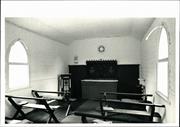
The church and it's fittings are important foor their aesthetic characterisitcs as a simple, furnished timber building ; the place is historically significant for it's association with the earlier Bush Shelter Church constructed at the river crossing nearby and for it's connections with the order of S Boniface; it is socially important for it's use by the local community and is valued as a bush church today.
St Peter’s Church, a small one room timber building. The adjoining Pindellup Cemetery is aesthetically and historically important as the burial ground for pioneer settlers in the district and their descendants.
Site blessed by the bishop 1910. Built 1910. First Wedding 1911.
| Owner | Category |
|---|---|
| Anglican Diocese of Bunbury | Church Property |
This information is provided voluntarily as a public service. The information provided is made available in good faith and is derived from sources believed to be reliable and accurate. However, the information is provided solely on the basis that readers will be responsible for making their own assessment of the matters discussed herein and are advised to verify all relevant representations, statements and information.