Local Government
Toodyay
Region
Avon Arc
Culham
GPS: 0450534 6524593 (vicinity)
Toodyay
Avon Arc
Constructed from 1899
| Type | Status | Date | Documents |
|---|---|---|---|
| Heritage List | Adopted | 01 Dec 2012 |
| Type | Status | Date | Documents |
|---|---|---|---|
| (no listings) |
| Type | Status | Date | Grading/Management | |
|---|---|---|---|---|
| Category | ||||
| Municipal Inventory | Adopted | 27 Aug 1998 | Category 3 | |
Historic Site
| Epoch | General | Specific |
|---|---|---|
| Original Use | SOCIAL\RECREATIONAL | Other Community Hall\Centre |
| Present Use | SOCIAL\RECREATIONAL | Other Community Hall\Centre |
| General | Specific |
|---|---|
| SOCIAL & CIVIC ACTIVITIES | Sport, recreation & entertainment |
This information is provided voluntarily as a public service. The information provided is made available in good faith and is derived from sources believed to be reliable and accurate. However, the information is provided solely on the basis that readers will be responsible for making their own assessment of the matters discussed herein and are advised to verify all relevant representations, statements and information.
Constructed from 1899
The site has historic value for the associations with generations of Culham settlers who gathered for social, community and recreational activities. The site has research value as it has potential to contain subsurface archaeological remains.
No remains were found on the site.
The Toodyay Valley Settlers initially formed and met in the 1890's to raise funds for school purposes and a meeting hall. They revived the custom of ploughing matches at 'Culham' and 'Hawthornded'. The club qualified for the government grant for a hall and then changed their focus to the proposed railway. The Culham Hall was built on the northern boundary of the 'Culham Estate' at the Plains Road Boundary and opened in May 1899. The opening was celebrated with a cricket match against the Victoria Plains team and a ball in the evening. However, it was two mile east of Pell Mell School and miles north of Culham Church which proved inconvenient for the settlers in the region and a cohesive community centre was difficult to develop. After the subdivision of the Coondle and Nunyle estates those communities used the Culham Hall but even after Nunyle built a hall in 1897 and Coondle n 1927the three communities worked together and supported each other. In 1902 a meeting at the hall appointed a committee to agitate for the railway extension to Bolgart. The Toodyay Valley Settlers discussed the route of the proposed railway and organised a deputation to the Government in 1902. One of the most important social events in the Toodyay Valley was the annual Culham races. The race club was formed in 1902 and the track went around the hall with special permission granted to use part of the Bolgart Road. Over 500 people attended the first meeting at Easter 1903. When the railway line reached Bolgart in 1909 a distinct holiday was declared and a celebration dinner was held in the hall that evening with a special train picking people up along the line. The railway line cut through the race track at Culham and although a new track was marked out the races gradually declined in popularity and the last meeting was held in 1913.
Site Only
| Owner | Category |
|---|---|
| Department of Planning & Infrastructure | State Gov't |
This information is provided voluntarily as a public service. The information provided is made available in good faith and is derived from sources believed to be reliable and accurate. However, the information is provided solely on the basis that readers will be responsible for making their own assessment of the matters discussed herein and are advised to verify all relevant representations, statements and information.
Cnr Telegraph & Toodyay-Bindi Bindi Rd Culham
GPS: 0450330 6524586
Toodyay
Avon Arc
Constructed from 1899
| Type | Status | Date | Documents |
|---|---|---|---|
| Heritage List | Adopted | 01 Dec 2012 |
| Type | Status | Date | Documents |
|---|---|---|---|
| (no listings) |
| Type | Status | Date | Grading/Management | |
|---|---|---|---|---|
| Category | ||||
| Municipal Inventory | Adopted | 27 Aug 1998 | Category 3 | |
Historic Site
| Epoch | General | Specific |
|---|---|---|
| Present Use | SOCIAL\RECREATIONAL | Other |
| Original Use | SOCIAL\RECREATIONAL | Other |
| General | Specific |
|---|---|
| SOCIAL & CIVIC ACTIVITIES | Sport, recreation & entertainment |
This information is provided voluntarily as a public service. The information provided is made available in good faith and is derived from sources believed to be reliable and accurate. However, the information is provided solely on the basis that readers will be responsible for making their own assessment of the matters discussed herein and are advised to verify all relevant representations, statements and information.
Constructed from 1899
The site has historic value for the associations with generations of Culham settlers who gathered for social, community and recreational activities. The site has research value as it has potential to contain subsurface archaeological remains.
Some possible remnants of the cricket ground remains but nothing wholly discernible was found.
The Toodyay Valley settlers initially formed and met in the 1890's to raise funds for school purposes and a meeting hall. They revived the custom of ploughing matches at 'Culham' and 'Hawthornden'. The club qualified for the government grant for a hall and then changed their focus to the proposed railway. The Culham Hall was built on the northern boundary of the 'Culham' Estate at the Plains Road Boundary and opened in May 1899. The opening was celebrated with a cricket match against the Victoria Plains team and a ball in in the evening. This match and many subsequent matches were held at this site. In 1979, a cricket match between the old cricket clubs was played at the site.
None
| Owner | Category |
|---|---|
| Mr. Horvath | Other Private |
This information is provided voluntarily as a public service. The information provided is made available in good faith and is derived from sources believed to be reliable and accurate. However, the information is provided solely on the basis that readers will be responsible for making their own assessment of the matters discussed herein and are advised to verify all relevant representations, statements and information.
Toodyay-Bindi Bindi Rd Culham
Three separate dwellings on site 1836 (which now forms part of the existing dwelling), 1847 and 1857 GPS: 0448450 6523277 Outbuilding 0448455 6523325 Machinery shed 0448682 6523343
Toodyay
Avon Arc
Constructed from 1836
| Type | Status | Date | Documents |
|---|---|---|---|
| Heritage List | Adopted | 01 Dec 2012 |
| Type | Status | Date | Documents |
|---|---|---|---|
| RHP - To be assessed | Current | 25 Feb 2005 |
| Type | Status | Date | Grading/Management | |
|---|---|---|---|---|
| Category | ||||
| Municipal Inventory | Adopted | 27 Aug 1998 | Category 1 | |
| Classified by the National Trust | Classified | 11 Jun 1973 | ||
| Register of the National Estate | Permanent | 21 Mar 1978 | ||
· The place is a good example of Victorian Georgian mud brick architectural style in a rural area.
· The place is significant for its association with Squire Phillips and his family.
· The place is associated with the development of the surrounding area as it was used as a meeting place, school, and for social functions. SJ Phillips (the owner at the time) was a dominant community member – acting on the Roads Board, mechanic Institute and the Board of Education.
‘The existing dwelling comprises three distinct periods of construction 1836, a mud brick dwelling which is now incorporated into the existing dwelling. Another mud brick dwelling 1847 and in 1857 a two storey brick house was built close to the mud brick house, later with a roof over both ruins by the brook. During the 1880s another house was built onto the original 1836 house.’
‘The land was part of the Culham estate that Samuel Pole Phillips and Edward Hamersley owned in partnership after Waylen took up the original grant of 12 573 acres. Whitfield’s sons farmed the land until Phillips and Hamersley took it over in 1839. Samuel Pole Phillips had trained for the Ministry, but migrated to the Colony in 1839, setting up a horse breeding partnership with Hamersley, a relation by marriage. Phillips lived on Culham, while Hamersley lived in Guildford, until he returned to England in 1843, leaving Phillips in charge. In 1840, Samuel Pole Phillips was one of the Directors on the Toodyay Roads Trust. Culham was the name of Phillips family home on the Thames in England and many of the furniture and finishing’s of the new ‘Culham’ were from England. There have been four houses on the site.’ ‘In 1847 Samuel James Phillips married Sophia Roe, the daughter of the Surveyor General John Septimus Roe. Bush fires that year destroyed 30 tons of cut sandalwood. In 1850, a significant exploration party travelling to the Murchison, assembled at Culham to join a number of Avon Valley participants including Phillips, James Drummond and two of his sons, as well as flocks and herds of stock. By 1851, Phillips was one of six in the Colony employing TOL workers.’ ‘In 1853, Phillips travelled to England with his family, and during that time dissolved his partnership with Edward Hamersley at which time, Hamersley took the northern portion of the property and called it ‘Haseley’. Phillips returned from England in 1855 with friends (brothers-in-law), Augustus Lee Steere (married Ellen Roe) and Guy Thompson (married Emma Roe), who went into a horse breeding partnership at Culham. They had the best blood horse at the show for many years, but split the partnership in 1858. Phillips built a new home when he returned from England, and furnished with English furniture, living in the best English tradition. He insisted on good roads between Culham and Perth.’ ‘From 1857 to 1872, Samuel James Phillips was a member of the Legislative Council and was commonly known as Squire. By 1869, Phillips invited his workman’s children to join school classes run by his governess. He served on the Board of Education and Roads Board 1866, and Vice President of the Mechanics Institute. In 1875, when the Giles party arrived, New Norcia telegraphed ahead and Forrest rendezvoused with him at Culham.’ ‘The Church bazaar at Culham was a major social event during the late 1890’s attracting hundreds of people to the cricket matches, booths and a ball in the shearing shed.’ ‘By 1929, Phillips was an invalid and no longer served on any Roads Board. His family continue to own and reside on the property.’
High
Good
| Library Id | Title | Medium | Year Of Publication |
|---|---|---|---|
| 7915 | Toodyay homesteads: past and present. | Book | 2006 |
Individual Building or Group
| Epoch | General | Specific |
|---|---|---|
| Original Use | FARMING\PASTORAL | Homestead |
| Present Use | RESIDENTIAL | Single storey residence |
| Style |
|---|
| Victorian Georgian |
| Type | General | Specific |
|---|---|---|
| Wall | EARTH | Adobe {Mud Brick} |
| Roof | METAL | Corrugated Iron |
| General | Specific |
|---|---|
| OCCUPATIONS | Grazing, pastoralism & dairying |
This information is provided voluntarily as a public service. The information provided is made available in good faith and is derived from sources believed to be reliable and accurate. However, the information is provided solely on the basis that readers will be responsible for making their own assessment of the matters discussed herein and are advised to verify all relevant representations, statements and information.
Constructed from 1880, Constructed from 1836
The place has historic value through its associations with Samuel James (Squire) Phillips, the Phillips family and builder George Hassel. The place has historic value as a demonstration of the development of a homestead from the 1830's. The place has aesthetic value for its remaining original construction methods and materials.
Single storey house incorporating earlier mudbrick house. Hipped iron roof with prominent painted brick chimneys. Open verandahs extend around the dwelling with timber posts, iron roof which overlays the original shingles. To the rear, the original mudbrick dwelling adjoins the present homestead by way of covered breezeway. The structure has rendered and painted elevations, 9-paned windows and steps to the doors. Mudbrick out building with iron roof and bush timbers. Steeply pitched gable roof construction with an exposed gable with evidence of some of the timbers being missing. The opposing gable end is bricked in. There is remnant rendering on some of the mudbricks. Bush timber door architrave and window lintels. Brick shearing shed laid in English Garden Wall bond, iron roof and bush timbers. Timber and iron shed attached. Iron outbuilding with prominent external chimney breast. Shed built upon a stone base. Shallow pitched iron roof.
The land was part of the Culham Estate that Samuel Pole Phillips and Edward Hamersley owned in partnership from 1839. They set up a horse breeding partnership with Hamersley organising the business from Guildford and Phillips the horses at Culham. Culham was the name of the Phillips' family home on the Thames in England. Samuel James Phillips took over management of the property and became heavily involved in local community affairs. S.J. Phillips was commonly known as 'Squire' Phillips. The family were leaders in the community and through marriage and business interests were associated with the influential families in the colony. There have been four houses on the site; the first a cottage known as 'Shepherds Hut', then a larger mud brick house was built beside the Toodyay Brook. A two-storey house was built alongside the mudbrick house with George Henry Hassel as the contractor. Finally, another house was built incorporating the 'Shepherds hut'. The Phillips family continue to manage and live on the property.
Integrity: High Authenticity: High
Good
| Owner | Category |
|---|---|
| Culham Nominees Pty Ltd | Other Private |
This information is provided voluntarily as a public service. The information provided is made available in good faith and is derived from sources believed to be reliable and accurate. However, the information is provided solely on the basis that readers will be responsible for making their own assessment of the matters discussed herein and are advised to verify all relevant representations, statements and information.
1050 Toodyay-Bindi Bindi Rd Culham
GPS: 0446531 6519764
Culham Church
Toodyay
Avon Arc
Constructed from 1852, Constructed from 1857
| Type | Status | Date | Documents |
|---|---|---|---|
| Heritage List | Adopted | 01 Dec 2012 |
| Type | Status | Date | Documents |
|---|---|---|---|
| RHP - To be assessed | Current | 27 Feb 2004 |
| Type | Status | Date | Grading/Management | |
|---|---|---|---|---|
| Category | ||||
| Classified by the National Trust | Recorded | 01 Jun 1973 | ||
| Anglican Church Inventory | YES | 31 Jul 1996 | ||
| Classified by the National Trust | Classified | 16 Jun 2016 | ||
| Municipal Inventory | Adopted | 27 Aug 1998 | Category 1 | |
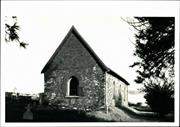
The place has aesthetic value as a stone & brick church in the Victorian Gothic style with an associated cemetery located in a picturesque rural setting.
The place has associations with the development of Culham and in particular with the local Anglican Parish from 1850s up to the present day.
The place has associations with pioneers of the Culham area, the Phillips, who donated the land towards the construction of the church and were highly influential in its construction.
The place is believed to be the second oldest still operating Anglican Church in WA.
The place is one of only a few extant churches dating from the 1850s in the Wheatbelt area.
The place comprises a church, cemetery, wc, front entry gate and fence, and plantings such as pencil pines. The church is of stone construction (1852) with brick gable infills (1857) and a steep CGI clad roof. There are brick quoins to openings, including the arched leadlight windows, and the building has a separate rendered front porch. Steel braces have been installed on the south-east side of the building. The cemetery has headstones and railings.
In 1847, the Church of England constituted a new diocese of South Australia which included all of Western Australia until 1856. In 1849, Bishop Augustus Short, the first Bishop of Adelaide, visited his brother in law SP Phillips at Culham, and recognisiong the need for a church Phillips donated 12 acres of land for the purpose, and started a building fund. In 1850, the timber was cut, and by 1852, the stone walls had been constructed, and the building was roofed with flat sheets of iron. (shipments of sheet iron were available in Perth from late 1840s). The first service was held in April 1853, even though the church wasn’t finished, and in November 1854, Simon Martin and Emily Doust were married in the church even though it was in a bad state of repair. The Phillips family departed for England, and the church fell into disrepair. When the Phillips returned, work was resumed, and the church opened on 19 July 1857, and was celebrated with a dinner at the Culham homestead that evening. Although a Bishop of Perth had been consecrated in 1856, St Phillip’s was not consecrated until September 1895, when the Right reverend GOL Riley, the 3rd Bishop and 1st Archbishop traveled to Culham. Special permission is required to be buried in Culham Cemetery; a person must be a descendant of someone already interred. The church is the second oldest active Anglican church in Western Australia, (Oldest is St John’s in Albany) and still a cemetery. The church is still an active worship centre with monthly services and special services at Christmas, Easter and Harvest.
High
Sound
| Library Id | Title | Medium | Year Of Publication |
|---|---|---|---|
| 7915 | Toodyay homesteads: past and present. | Book | 2006 |
Individual Building or Group
| Epoch | General | Specific |
|---|---|---|
| Present Use | RELIGIOUS | Church, Cathedral or Chapel |
| Original Use | RELIGIOUS | Church, Cathedral or Chapel |
| Style |
|---|
| Victorian Free Gothic |
| Type | General | Specific |
|---|---|---|
| Wall | STONE | Other Stone |
| Roof | METAL | Corrugated Iron |
| General | Specific |
|---|---|
| SOCIAL & CIVIC ACTIVITIES | Religion |
This information is provided voluntarily as a public service. The information provided is made available in good faith and is derived from sources believed to be reliable and accurate. However, the information is provided solely on the basis that readers will be responsible for making their own assessment of the matters discussed herein and are advised to verify all relevant representations, statements and information.
Constructed from 1852, Constructed from 1947
The place has historic value as the first Anglican Church in Toodyay district and for the continuing use of the cemetery. The place has historic value for its associations with significant church dignitaries and the Philips family in Culham. It is the second oldest active Anglican Church in Western Australia. The church has social value for its role in the community and its sense of place for generations of people who have worshipped and had special events and celebrations in the church. The place has aesthetic value for its simple and classic design and use of local materials and its contribution to the townscape.
Stone, brick and iron construction, steeply pitched roof with brick gables, pointed arch windows with brick dressings and leaded timber framed casement windows. Rendered porch with steeply pitched roof. Brickwork in gables laid in English garden wall bond. Adjoining cemetery within bush setting. Stabilisation works are propping the rear elevation up.
In 1847 the Church of England constituted a new diocese of South Australia which included all of Western Australia until 1856. In 1849 Bishop Augustus Short, the first Bishop of Adelaide, visited his brother-in-law SP Phillips at culham and, recognising the need for a church, Phillips donated 12 acres of land and started a building fund. In 1850, the timber was cut and by 1852 the stone walls had been constructed (by George Henry Hasell) and the building was roofed with flat sheets of iron. The first service was held in April 1853, despite the church building not being completed. The Phillips family departed for England and the church fell into disrepair. When the Phillips' returned, work was resumed and the church opened on 19 July 1857. St Phillip's was consecrated in September 1895 when Right Reverend GOL Riley, the third Bishop and first Archbishop, travelled to Culham. The church is the second oldest active Anglican church in Western Australia and is still an active cemetery (although there are special conditions to being buried there).
Integrity: High Authenticity: High
Poor-Fair
| Owner | Category |
|---|---|
| Perth Diocesan Trustees | Church Property |
This information is provided voluntarily as a public service. The information provided is made available in good faith and is derived from sources believed to be reliable and accurate. However, the information is provided solely on the basis that readers will be responsible for making their own assessment of the matters discussed herein and are advised to verify all relevant representations, statements and information.