Local Government
Bridgetown-Greenbushes
Region
South West
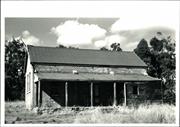
Winnejup
School
Bridgetown-Greenbushes
South West
| Type | Status | Date | Documents |
|---|---|---|---|
| (no listings) |
| Type | Status | Date | Documents |
|---|---|---|---|
| (no listings) |
| Type | Status | Date | Grading/Management | |
|---|---|---|---|---|
| Category | ||||
| (no listings) | ||||
Individual Building or Group
| Epoch | General | Specific |
|---|---|---|
| Present Use | SOCIAL\RECREATIONAL | Other Community Hall\Centre |
| Original Use | EDUCATIONAL | Primary School |
This information is provided voluntarily as a public service. The information provided is made available in good faith and is derived from sources believed to be reliable and accurate. However, the information is provided solely on the basis that readers will be responsible for making their own assessment of the matters discussed herein and are advised to verify all relevant representations, statements and information.
Cnr Dalmore & Falnash Rds Winnejup
Located on the same property as Falnash
Bridgetown-Greenbushes
South West
Constructed from 1920
| Type | Status | Date | Documents |
|---|---|---|---|
| (no listings) |
| Type | Status | Date | Documents |
|---|---|---|---|
| (no listings) |
| Type | Status | Date | Grading/Management | |
|---|---|---|---|---|
| Category | ||||
| Municipal Inventory | Adopted | 28 Jun 2001 | Category 2 | |
| Municipal Inventory | Adopted | 29 Mar 2018 | Management Category C | |
| Name | Type | Year From | Year To |
|---|---|---|---|
| Colin Scott | Architect | - | - |
Individual Building or Group
| Epoch | General | Specific |
|---|---|---|
| Original Use | RESIDENTIAL | Single storey residence |
| Present Use | RESIDENTIAL | Single storey residence |
| Type | General | Specific |
|---|---|---|
| Roof | TILE | Other Tile |
| Wall | CONCRETE | Other Concrete |
| General | Specific |
|---|---|
| PEOPLE | Early settlers |
| DEMOGRAPHIC SETTLEMENT & MOBILITY | Settlements |
This information is provided voluntarily as a public service. The information provided is made available in good faith and is derived from sources believed to be reliable and accurate. However, the information is provided solely on the basis that readers will be responsible for making their own assessment of the matters discussed herein and are advised to verify all relevant representations, statements and information.
Constructed from 1920
Dalmore is of aesthetic value for its design and setting. It is also of historic, and social value for both its past and present activities. It still has a number of significant farm buildings and the original homestead. Aesthetic Value Dalmore is of aesthetic value for the quality of its buildings, farm setting and the early plantings near the house and quarters, particularly the old cork tree. Historic Value Bill Scott’s farm, once the most productive orchard in the Bridgetown District, is of historic value for its forward thinking farming methods introducing fertilisers to the soils before others in the district. Research Value NA Social Value High Dalmore was of high social value as a highly productive orcharding property, requiring numerous workers to pick the crops. In later years shearing teams were required on the property. The farming is now of a somewhat smaller scale using modernised methods, requiring less labour, however the old packing/shearing shed is now used as a yoga/fitness studio, providing a modern social value.
Dalmore farm currently consists of the 1920’s house, the original fruiting packing/shearing shed (now gymnasium), the worker’s cottage and various other outbuilding of less significance. The house is somewhat typical of a 1920’s California Bungalow, with a rendered brick façade, triple casement windows (each divided into small leadlight panes), half-timbered gables and robust verandah piers with stone plinths and rendered tapered posts. The terracotta tiled roof has been replaced with a red Colorbond roof in recent years, and extensions have been made to the southern side and rear of the house. The original packing shed has been modernised and adapted to a high standard for use as a gymnasium and function room, however it retains many of its earlier features including double action catching pen doors and exposed steel truss framing. The shearers’/worker’s quarters remain in situ to the east of the shed. An old barn began collapsing only a few years ago and has since been removed. The house backs onto an all year round creek, an important water supply for the farm. Near the shearers’/worker’s quarters is a very large cork tree, thought to be an early planting.
Robert Purdom Scott purchased a large parcel of land from Sir James George Lee-Steere’s ‘Jayes’ property c.1897. This was occupied by his sons, and Robert (snr) continued to work as a bank manager in South Australia until his retirement in 1919. His obituary (1929) and other newspaper notices of the period indicate he then settled on a property named Warraninni, which was near the farm he had established for his sons at the end of the nineteenth century. Warraninni was later occupied by his daughter, Kate Louise, and her husband, Basil Wardell-Johnson. Newspaper notices and advertisements dating from c.1903-1911, refer to various members of the Scott family as living on a property known as ‘Dalmore’ (including Robert Purdom Scott’s 3 sons Robert Wooley, Alexander ‘Alec’ Bell, and William ‘Bill’ Purdom). Another newspaper report, dated 1930, states that a partnership between RW and WP Scott was dissolved in 1913, and that the property was subdivided as ‘Dalmore’ and ‘Falnash’ at that time. Local history suggests that their brother, Alec, occupied another local property, ‘Weroona’. However, entries in the Electoral Rolls suggest that he was a storekeeper of Fitzroy Crossing by 1912 and was later a hotel keeper (variously in the north-west of WA and the Northern Territory). The current Dalmore homestead was built c.1920. It has since had additions to the rear and a number of modern modifications, however retains many of its early details and features and retains its 1920’s character. An original packing shed still exists on the property. This was later used as a shearing shed and now used as a gymnasium (fitness studio). The property also contains shearer’s/worker’s quarters which were also used to house Italian World War II POW’s who worked on the farm.
Moderate The property is still both a working farm and residence. Moderate Significant buildings remain and despite many changes and additions to them, the original character of the buildings is still clearly recognisable.
Good
| Ref ID No | Ref Name | Ref Source | Ref Date |
|---|---|---|---|
| Western Mail pg.34 | 10/04/1930 | ||
| The Advertiser pg.22 | 1/02/1929 | ||
| South Western Times pg.6 | 15/01/1927 | ||
| Current Owner | |||
| Fran Taylor | Bridgetown The Early Years, People of the Warren Blackwood District | ||
| Southern Times pg.5 | 16/01/1908 |
| Ref Number | Description |
|---|---|
| No.R2 | MI Place No. |
| A48478 | Assess No (Shire Ref) |
| Reserve | Lot/Location | Plan/Diagram | Vol/Folio |
|---|---|---|---|
| 71&72 | 20981 | 2066/199 |
This information is provided voluntarily as a public service. The information provided is made available in good faith and is derived from sources believed to be reliable and accurate. However, the information is provided solely on the basis that readers will be responsible for making their own assessment of the matters discussed herein and are advised to verify all relevant representations, statements and information.
Cnr Dalmore & Falnash Rds Winnejup
Bridgetown-Greenbushes
South West
Constructed from 1890
| Type | Status | Date | Documents |
|---|---|---|---|
| Heritage List | Adopted | 28 Nov 2019 |
| Type | Status | Date | Documents |
|---|---|---|---|
| (no listings) |
| Type | Status | Date | Grading/Management | |
|---|---|---|---|---|
| Category | ||||
| Municipal Inventory | Adopted | 29 Mar 2018 | Management Category B | |
| Municipal Inventory | Adopted | 28 Jun 2001 | Category 2 | |
Individual Building or Group
| Epoch | General | Specific |
|---|---|---|
| Original Use | FARMING\PASTORAL | Homestead |
| Present Use | FARMING\PASTORAL | Homestead |
| Type | General | Specific |
|---|---|---|
| Wall | STONE | Local Stone |
| Roof | METAL | Corrugated Iron |
| Wall | TIMBER | Weatherboard |
| General | Specific |
|---|---|
| PEOPLE | Early settlers |
| DEMOGRAPHIC SETTLEMENT & MOBILITY | Settlements |
This information is provided voluntarily as a public service. The information provided is made available in good faith and is derived from sources believed to be reliable and accurate. However, the information is provided solely on the basis that readers will be responsible for making their own assessment of the matters discussed herein and are advised to verify all relevant representations, statements and information.
Constructed from 1897
Despite being derelict, Falnash remains significant as a late nineteenth century pastoral homestead associated with the opening up of the Blackwood district. It retains associated outbuildings and orchard, and is significant for its historic, aesthetic and social values. Aesthetic Value The restrained Georgian style detailing of the stone house remains aesthetically pleasing. Historic Value Falnash is historically significant as an early settler’s farm, which ran one of the most successful orchards in the district. Along with Dalmore farm, Falnash was well-known for the Scott Bros’ knowledge and use of fertilisers and pest control to produce high yield crops. Research Value NA Social Value Falnash was of high social value as a highly productive orcharding property, which would have required numerous workers to pick the crops.
This homestead appears to have begun as a large single room using stone from the farm, which is a mixture of laterite and granite. The corners and openings were finished with brick and cement rendered quoins and the walls were ruled with mortar to imitate a higher quality ashlar stonework (a common finish at that time). A second room appears to have been added alongside a short time later, in the same style. A separate room of the same style on the northern side appears to have been used as a cool store for produce. Heavy hooks still exist in the ceiling beams. Later additions to the house on the eastern side are of timber and weatherboard construction and include plasterboard lining of internal walls. The corrugated iron roof incorporates the original and later portions. Portions of the verandah and roofing are collapsing and the inside of the house is now derelict. A large barn located between the house and Falnash Road collapsed sometime between 2010 and 2013. Portions of the roof and wall structures have remained intact, albeit on the ground, however these are soon to be deconstructed with some of the wood to be stored and retained by the owners. A water tank set high on a timber structure remains in place, however this is at risk of falling in the near future. A number of early plantings remain, including nine oak trees, which are scattered either side of the original driveway, as well as two pine trees. A substantial portion of the original orchard also remains approximately 150m south east of the house.
Robert Purdom Scott purchased a large parcel of land from Sir James George Lee-Steere’s ‘Jayes’ property c.1897. This was occupied by his sons and Robert (snr) continued to work as a bank manager in South Australia until his retirement in 1919. His obituary (1929) and other newspaper notices of the period indicate he then settled on a property named ‘Warraninni’, which was near the farm he had established for his sons at the end of the nineteenth century. Warraninni was later occupied by his daughter, Kate Louise, and her husband, Basil Wardell-Johnson. Newspaper notices and advertisements dating from c.1903-1911, refer to various members of the Scott family as living on a property known as ‘Dalmore’ (including Robert Purdom Scott’s 3 sons, Robert Wooley, Alexander ‘Alec’ Bell, and William ‘Bill’ Purdom). Another newspaper report, dated 1930, states that a partnership between RW and WP Scott was dissolved in 1913, and that the property was subdivided as ‘Dalmore’ and ‘Falnash’ at that time. Local history suggests that their brother, Alexander Bell Scott, occupied another local property, ‘Weroona’. However, entries in the Electoral Rolls suggest that he was a storekeeper of Fitzroy Crossing by 1912 and was later a hotel keeper (variously in the north-west of WA and the Northern Territory). The house now known as ‘Falnash’ (which was named after a village in southern Scotland where Robert Purdom’s father was once a tenant farmer) is reputed to have been the first place of settlement for the Scott family in this district, and the style of the house is consistent with the reported construction date of c.1897. The 1953 obituary for Robert Scott’s wife, Ellen (‘Nell’), confirms that they occupied Falnash in 1913 and remained here until their retirement in 1948. The orchard was planted c.1915 and Falnash became a large producer of apple and pears and was a large exporter of pears to the London Market.
Medium While the house is now derelict, the land is still used for grazing. Although a portion of the orchard exists it is unkept. Medium Although built in two or three stages and now being in a poor state, the building is still of medium authenticity. The original building and the sequence of development can be readily understood from the surviving fabric.
Poor
| Ref ID No | Ref Name | Ref Source | Ref Date |
|---|---|---|---|
| The Blackwood Times pg.1 | 25/09/1953 | ||
| Western Mail pg.34 | 10/04/1930 | ||
| Online newspapers (trove.nla.gov.au/newspaper) | |||
| South Western Times pg.6 | 15/01/1927 | ||
| The Blackwood Times pg.11 | 28/01/1949 |
| Ref Number | Description |
|---|---|
| No.R3 | MI Place No. |
| A23870 | Assess No (Shire Ref) |
| Reserve | Lot/Location | Plan/Diagram | Vol/Folio |
|---|---|---|---|
| 3/728/1141 | 13858 | 1331/123A |
This information is provided voluntarily as a public service. The information provided is made available in good faith and is derived from sources believed to be reliable and accurate. However, the information is provided solely on the basis that readers will be responsible for making their own assessment of the matters discussed herein and are advised to verify all relevant representations, statements and information.
Mears Rd Winnejup
Bridgetown-Greenbushes
South West
Constructed from 1900
| Type | Status | Date | Documents |
|---|---|---|---|
| (no listings) |
| Type | Status | Date | Documents |
|---|---|---|---|
| (no listings) |
| Type | Status | Date | Grading/Management | |
|---|---|---|---|---|
| Category | ||||
| Municipal Inventory | Adopted | 28 Jun 2001 | Category 2 | |
| Municipal Inventory | Adopted | 29 Mar 2018 | Management Category C | |
Individual Building or Group
| Epoch | General | Specific |
|---|---|---|
| Present Use | FARMING\PASTORAL | Shed or Barn |
| Original Use | FARMING\PASTORAL | Shed or Barn |
| General | Specific |
|---|---|
| DEMOGRAPHIC SETTLEMENT & MOBILITY | Settlements |
This information is provided voluntarily as a public service. The information provided is made available in good faith and is derived from sources believed to be reliable and accurate. However, the information is provided solely on the basis that readers will be responsible for making their own assessment of the matters discussed herein and are advised to verify all relevant representations, statements and information.
Constructed from 1917
Mandalup is significant for its historic and social values as a working farm. Aesthetic Value Mandalup has aesthetic value for its original two storey jarrah and tin shed and its idyllic rural setting beside the Blackwood River. Historic Value Mandalup has historic value for its remaining original shed, remnant materials of house and foundry, and for its historic context within the development of the orcharding and pastoralism activities within the district. Research Value NA Social Value Mandalup was of social value as a working orchard, providing employment for fruit pickers. Its social value remains for the shearing teams that continue to work and camp seasonally at the shed.
The original house at Mandalup was situated near the remaining two-storey slab (shearing) shed, where some remnant timber and roof iron remains on the ground. A later built garage of little significance remains standing nearby. Toward the river, approximately 150m to the north of the shed, lay the remains of a small foundry. The shed has an original two storey portion, with the lower, rear portion housing the stable and chaff processing area. A separate verandah awning facing south houses machinery while to the north is a later semi-enclosed extension of timber frame and corrugated iron walls. The shed is now used predominantly for shearing, with the shearing board at the lower front of the shed, adjoining the outside pens. The skirting table sits adjacent in the single storey extension to the north, and the wool baling machine sits on the top floor, with the fleeces being thrown up by hand. A new two storey house of iron frame and timber cladding was built around the 1970’s and is situated uphill of the shed.
Blackwood Bend Farm (R10) was originally taken up by Police Constable George Meares c.1892. Mandalup Farm was formed as a subdivision of Blackwood Bend Farm c.1917-1922, for George’s eldest son, Walter Goldsmith Meares (Snr). The original house at Mandalup was situated near the remaining two-storey slab (shearing) shed, with the tennis court opposite. The unmilled lengths of timber roof framing in the top storey of the shed were also used to hang and dry animal skins. The top floor of the shed was originally used for fruit (predominantly apples) sorting and packing, which made packing into the truck easier as the truck was backed up to the top floor opening. (See photo above). Presumably the farm was also used for farming stock in those early years, as an old butcher’s shed once stood near the foundry. The farm is still used for grazing stock.
Medium Although the farm no longer produces fruit for market, Mandalup remains a productive farm with a farm homestead. High Despite a change in predominant use over the years and the extension of the shed to the north, the original portion of the shed is of high authenticity.
Fair
| Ref ID No | Ref Name | Ref Source | Ref Date |
|---|---|---|---|
| Mal and Kris Meares | Meares family and current tenant | ||
| Fran Taylor | Bridgetown The Early Years (Book Two) |
| Ref Number | Description |
|---|---|
| No.R1 | MI Place No. |
| A24804 | Assess No (Shire Ref) |
| Reserve | Lot/Location | Plan/Diagram | Vol/Folio |
|---|---|---|---|
| 739 | 251941 | 2105/405 |
This information is provided voluntarily as a public service. The information provided is made available in good faith and is derived from sources believed to be reliable and accurate. However, the information is provided solely on the basis that readers will be responsible for making their own assessment of the matters discussed herein and are advised to verify all relevant representations, statements and information.
2261 Tweed Rd Winnejup
in MI as Hamilton Rd Part of NT Blackwood River Crossing & First Settlers Precinct
Bridgetown-Greenbushes
South West
Constructed from 1860
| Type | Status | Date | Documents |
|---|---|---|---|
| (no listings) |
| Type | Status | Date | Documents |
|---|---|---|---|
| RHP - Assessed - Below Threshold | Current | 26 Jun 2009 |
| Type | Status | Date | Grading/Management | |
|---|---|---|---|---|
| Category | ||||
| Municipal Inventory | Adopted | 29 Mar 2018 | Management Category C | |
| Municipal Inventory | Adopted | 28 Jun 2001 | Category 1 | |
Forrest Homestead has been vacant for a number of years and is in very poor condition but appears salvageable.
| Name | Type | Year From | Year To |
|---|---|---|---|
| Walter Forrest | Architect | - | - |
Individual Building or Group
| Epoch | General | Specific |
|---|---|---|
| Present Use | VACANT\UNUSED | Vacant\Unused |
| Original Use | FARMING\PASTORAL | Homestead |
| Style |
|---|
| Vernacular |
| Type | General | Specific |
|---|---|---|
| Roof | METAL | Corrugated Iron |
| Wall | STONE | Local Stone |
| General | Specific |
|---|---|
| DEMOGRAPHIC SETTLEMENT & MOBILITY | Settlements |
| PEOPLE | Early settlers |
This information is provided voluntarily as a public service. The information provided is made available in good faith and is derived from sources believed to be reliable and accurate. However, the information is provided solely on the basis that readers will be responsible for making their own assessment of the matters discussed herein and are advised to verify all relevant representations, statements and information.
Forrest Homestead is significant as the home of Walter and Minna Forrest, and for its aesthetic, historic and social values, and as a good example of a stone cottage from the period. Aesthetic Value Despite extensive restorations and repairs, the homestead has retained much of its original character. Historic Value Wenigup farm is of historic significance as the farm (with homestead) of both J. Hassell and Walter Forrest, both of prominent early settler families in WA. Research Value NA Social Value Medium The place has some social value as a homestead and as an early Blackwood River stock crossing point.
The original cottage consisted of a main bedroom, a parlour and a small bedroom for the children. The stove and wet area being in an out-building. There was a verandah on the eastern side. The roof was corrugated iron and the walls of tuck pointed local stone and daub. The cottage appears to have been built in the late 19th century.
This property was originally owned by John Hassell and the cottage may have been built during his period of ownership (possibly as a residence for a farm manager). By 1894 the property was known as Wenigup, and was being managed by Charles Walter Forrest. CW Forrest (known as Walter), was the eldest surviving son of William (Jnr) and Mary Ann Forrest and nephew of Lord John Forrest. He grew up on the family farm at Dwalganup. Newspaper notices confirm that Walter was the manager of Wenigup farm in 1894-1895. When his father died in 1899, he took over the family farm at nearby Dwalganup and was still listed as a farmer of Dwalganup in the Electoral Rolls of 1906. At some stage between 1900 and 1908, Walter bought a 50 acre portion of the neighbouring property from J Hassell. Local oral history suggests that Edward Lee Steere built the home for Walter Forrest, possibly while he was still managing the farm. In 1908, Walter married Minna Louise Campbell Forrest and by 1909 they were listed in the Electoral Rolls as residents of Winigup (sic). Note: during the first half of the 20th century, newspaper articles variously referred to the general locality as Wenigup, Winejup, Winnejup, Winegup or Winnegup). Walter made a great success of the farm (which he later enlarged), predominantly with grazing and dairy farming. His property was well known for its river crossing (Winnejup Crossing), which was used by others crossing stock over the Blackwood River en-route to Perth or Albany for market. Walter and a neighbour later selected the river point close by to the property, at which a road bridge was to be built (Winnejup Bridge). Walter and Minna’s children attended the nearby Winnejup School/Hall (the position of which was also chosen by Walter), and he was an original member of the Hall committee. Walter lived here until his death in 1950 at age 79. His wife Minna stayed on the farm and was still milking the cows up until the day she died, at the age of 86. The property was left to Walter and Minna’s son Ted, however the original house was then left unoccupied until well after it changed into new hands in 1984. The new owner has restored the cottage over a number of years, replacing floors; stabilising /re-mortaring walls and ceilings; replacing doors and windows (as the originals had been removed from the property); and restoring chimneys. Bricks from the demolition of the old Winnejup school/hall in the 1980’s were re-used for restoration and repairs to chimneys, roofline and steps. The cottage is now once again lived in and the property has always remained a working farm.
High Although left vacant for some time, the homestead is now lived in once again. Medium The house has been restored with sympathetic materials.
Good
| Ref ID No | Ref Name | Ref Source | Ref Date |
|---|---|---|---|
| Contemporary newspaper reports (trove.nla.gov.au/newspaper) | |||
| Australian Marriage Register | 1908 | ||
| Southern Times pg.4 | 16/07/1898 | ||
| Australian Electoral Roles | 1906-1939 | ||
| The Southern Times pg.4 | 28/07/1894 | ||
| The Southern Times | 17/12/1903 | ||
| Western Mail pg.37 | 15/09/1900 |
| Ref Number | Description |
|---|---|
| No.R13 | MI Place No. |
| A24309 | Assess No (Shire Ref) |
| Reserve | Lot/Location | Plan/Diagram | Vol/Folio |
|---|---|---|---|
| 83 | 257558 | 1742/966 |
This information is provided voluntarily as a public service. The information provided is made available in good faith and is derived from sources believed to be reliable and accurate. However, the information is provided solely on the basis that readers will be responsible for making their own assessment of the matters discussed herein and are advised to verify all relevant representations, statements and information.