Local Government
Victoria Plains
Region
Wheatbelt
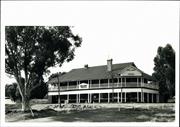
Cnr Poincare & Albert Sts Bolgart
Bolgart Hotel
Victoria Plains
Wheatbelt
Constructed from 1916
| Type | Status | Date | Documents |
|---|---|---|---|
| (no listings) |
| Type | Status | Date | Documents |
|---|---|---|---|
| (no listings) |
| Type | Status | Date | Grading/Management | |
|---|---|---|---|---|
| Category | ||||
| Statewide Hotel Survey | Completed | 01 Nov 1997 | ||
| Municipal Inventory | Adopted | 27 Oct 1998 | Category 3 | |
good
Individual Building or Group
| Epoch | General | Specific |
|---|---|---|
| Present Use | COMMERCIAL | Hotel, Tavern or Inn |
| Original Use | COMMERCIAL | Hotel, Tavern or Inn |
| Style |
|---|
| Federation Filigree |
| Type | General | Specific |
|---|---|---|
| Roof | METAL | Corrugated Iron |
| Wall | BRICK | Common Brick |
| General | Specific |
|---|---|
| OCCUPATIONS | Hospitality industry & tourism |
This information is provided voluntarily as a public service. The information provided is made available in good faith and is derived from sources believed to be reliable and accurate. However, the information is provided solely on the basis that readers will be responsible for making their own assessment of the matters discussed herein and are advised to verify all relevant representations, statements and information.
Constructed from 1916
The hotel is significant as one of the few state hotels in Western Australia, and the most authentic example of those remaining. It has a sense of place for generations of Bolgart community members, and has a close association with the railways and establishment of the new Bolgart townsite. It is an essential element of the Bolgart streetscape and townscape character.
Double storey brick construction with a gabled corrugated iron roof. Verandahs wrap the upper storey around the two street frontages.
J. H. Phillips made an application for a hotel licence in Bolgart when the railways workers arrived to construct the line northwards. There were 300 people within a 10 mile radius, and accomodation was needed for when the trains often ran late. There was opposition to the application; drunkenness, the distance to the police station in Toodyay, and the Wyening community wanted it located further north. As the Bolgart Bog workers camps grew, the town boomed. In 1914, Government plans were drawn for a single storey hotel in Throssell St Bolgart.(original townsite?) In August 1914, Phillips made a second application. The official response was the proposal to move the siding, have a new townsite surveyed with a block reserved for a State Hotel which would be licensed at once. The proposal from government received no opposition. The townsite was gazetted in November 1914, and surveyed in early 1915, to facilitate a hotel site and licence. After the 1915 floods rendered the 'Bog' siding unusable, the siding at the new townsite proceeded and was completed in early 1916. The hotel plans were altered for the new town and site. The State hotel was only one of a few in the state. (Corrigin, Bruce Rock, Kwolyin (destroyed by fire) and Wongan Hills) In 1960, the hotel passed in to private ownership after the offer to the Bolgart community was rejected.
Integrity: Intact or redeemable Authenticity: High degree
Good
| Ref ID No | Ref Name | Ref Source | Ref Date |
|---|---|---|---|
| Erickson R; "The Victoria Plains". | Shire of Victoria Plains | 1971 |
This information is provided voluntarily as a public service. The information provided is made available in good faith and is derived from sources believed to be reliable and accurate. However, the information is provided solely on the basis that readers will be responsible for making their own assessment of the matters discussed herein and are advised to verify all relevant representations, statements and information.
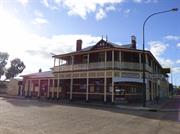
30 Johnson St Bruce Rock
Cnr Johnson & Bruce Sts
Bruce Rock State Hotel
Bruce Rock
Wheatbelt
Constructed from 1914 to 1970
| Type | Status | Date | Documents |
|---|---|---|---|
| State Register | Registered | 07 Jan 2000 | HCWebsite.Listing+ListingDocument, HCWebsite.Listing+ListingDocument |
| Type | Status | Date | Documents |
|---|---|---|---|
| (no listings) |
| Type | Status | Date | Grading/Management | |
|---|---|---|---|---|
| Category | ||||
| Municipal Inventory | Adopted | 11 Sep 1997 | Category 2 | |
| Statewide Hotel Survey | Completed | 01 Nov 1997 | ||
| Name | Type | Year From | Year To |
|---|---|---|---|
| W D Hardwick | Architect | - | - |
Individual Building or Group
| Epoch | General | Specific |
|---|---|---|
| Present Use | COMMERCIAL | Hotel, Tavern or Inn |
| Original Use | COMMERCIAL | Hotel, Tavern or Inn |
| Style |
|---|
| Federation Filigree |
| Type | General | Specific |
|---|---|---|
| Roof | METAL | Corrugated Iron |
| Wall | BRICK | Common Brick |
| General | Specific |
|---|---|
| OCCUPATIONS | Hospitality industry & tourism |
This information is provided voluntarily as a public service. The information provided is made available in good faith and is derived from sources believed to be reliable and accurate. However, the information is provided solely on the basis that readers will be responsible for making their own assessment of the matters discussed herein and are advised to verify all relevant representations, statements and information.
Constructed from 1914, Constructed from 1921
The place demonstrates a way of life. It is integral within the streetscape and the character of the town of Bruce Rock. The place demonstrates associations with pioneers of the area and is representative of an era of development.
Two storey brick construction. The First Floor verandahs extend around the two street frontages and form a colonnade at street level. The entry is located at the truncated corner. The corrugated iron roof is hipped with a verandah under the main roof and gable features. The verandah balustrade has been replaced with metal sheeting, c1970's and wasrestored to the original in 1997. The original 12 bedrooms were added to in the 1920's, extending the hotel frontage along Johnson Street.
As early as 1912, Hubert Robins applied for a liquor license in Nunagin (now Bruce Rock). That application was withdrawn due to a technical ommission of exact locality and later presented to the Northam Licensing Court in 1913, by which time the Premier (Scadden) had sought approval for a state hotel at Nunagin. The Railway Line through from Quairading had opened in Bruce Rock in March 1913 and connected through to Merredin by December that year. On the 17th June 1913, the town of Bruce Rock was gazetted and on 24th June approval was granted for a State Hotel at Nunagin (Bruce Rock) and Kwolyin. By August the plans for the then Bruce Rock State Hotel had been submitted and both the Kwolyin and Bruce Rock Hotels were built simutaneously, with the Kwolyin Hotel opening a few days before the Bruce Rock Hotel which opened on 27th May 1914. The hotel opened the year of a bad drought throughout the district and the onset of the First World War. With no hall in town, Hazell's Pictures showed the first cinema in Bruce Rock in the open air behind the hotel. From the outset, the hotel accommodation was inadequate and more rooms were added in 1921, which only relieved the situation for a short while. Many managers have been at the hotel, with AE Baxter from the 1920's and various other periods before being a popular "mine host". The early settlers worked constantly to establish their properties and social interaction was a welcome relief from the toil. Dances were a popular event, with a dance taking place on any floor, even before a building was finished, such was the case at the hotel, with a dance taking place at the bar before the hotel building was complete. As with most towns, with the advent of the hotel, the presence of the law was required. There was no lock-up in Bruce Rock when the hotel opened, so the drunks were chained to a log. In 1945, a local Town Planning Committee was formed and applied to purchase the "State Hotel" from the Government to convert it to a community hotel. The application was rejected. The hotel still operates, providing a social venue in the town and accommodation for travellers and tourists.
Integrity: Intact or Redeemable Authenticity: High Degree
Good
| Ref ID No | Ref Name | Ref Source | Ref Date |
|---|---|---|---|
| A Lovell;"Bruce Rock, A Revised History". | Shire of Bruce Rock | 1993 | |
| JK Ewers;"The story of the District of Bruce Rock". pp46, 48, 86 | Bruce Rock District Roads Board | 1959 |
| Owner | Category |
|---|---|
| GA Irving | Other Private |
This information is provided voluntarily as a public service. The information provided is made available in good faith and is derived from sources believed to be reliable and accurate. However, the information is provided solely on the basis that readers will be responsible for making their own assessment of the matters discussed herein and are advised to verify all relevant representations, statements and information.
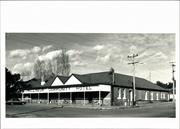
9 Marrinup St Dwellingup
Corner of Newton and Marrinup Street
Dwellingup Community Hotel
State Hotel
Murray
Peel
Constructed from 1911
| Type | Status | Date | Documents |
|---|---|---|---|
| Heritage List | Adopted |
| Type | Status | Date | Documents |
|---|---|---|---|
| RHP - Does not warrant assessment | Current | 15 Dec 2005 |
| Type | Status | Date | Grading/Management | |
|---|---|---|---|---|
| Category | ||||
| Local Heritage Survey | Adopted | 26 Mar 2020 | Category A | |
03447 Newton Street Precinct
Good
Individual Building or Group
| Epoch | General | Specific |
|---|---|---|
| Present Use | COMMERCIAL | Hotel, Tavern or Inn |
| Original Use | COMMERCIAL | Hotel, Tavern or Inn |
| Style |
|---|
| Federation Free Style |
| Type | General | Specific |
|---|---|---|
| Roof | METAL | Corrugated Iron |
| Wall | BRICK | Common Brick |
| General | Specific |
|---|---|
| OCCUPATIONS | Hospitality industry & tourism |
| SOCIAL & CIVIC ACTIVITIES | Sport, recreation & entertainment |
This information is provided voluntarily as a public service. The information provided is made available in good faith and is derived from sources believed to be reliable and accurate. However, the information is provided solely on the basis that readers will be responsible for making their own assessment of the matters discussed herein and are advised to verify all relevant representations, statements and information.
Constructed from 1911
Dwellingup Hotel is a prominent building in the town, and a landmark for more than a century. Dwellingup Hotel has been a significant social centre for the town for a century. Dwellingup Hotel is one of the oldest buildings in Dwellingup, the majority of other places having been destroyed in the 1961 fire. Dwellingup Hotel is rare as a previously State-run hotel.
Located on the corner of Newton and Marrinup Streets overlooking railway reserve. Singlestorey, brick Federation Free Style building. Displays a single rendered band along the facade of the hotel, with a second rendered band above windows. Corrugated iron roof with two substantial brick chimneys. Double hung windows under a decorative gable. Extensive internal and external changes have been made to the place: a new roof, a duplication of the gable roof end, and extensions at the rear.
Hugh McNeill applied for a liquor licence in Dwellingup in 1911, but the proposal was knocked back under opposition from mill owners and Dwellingup residents. In response, the State Government, under John Scaddon, intervened and passed a bill to establish a State Hotel, and McNeill received compensation for his failed proposal. In August 1919, the Hotel caught fire. Arson was suspected, although never proven. Major alterations and improvements were made as a result. The Hotel’s electrical plant was installed in 1922, making the place the first building in Dwellingup to be so powered. Dwellingup Hotel was one of the few buildings that survived the Dwellingup fires. Local tradition has it that everyone was at the hotel during the fires and that it was the first building saved by a human chain formed to carry water buckets. Alterations include a Beer Garden in 1971, additions in 1975, 1983 and 1988 and a swimming pool in 1992. The ablution block was replaced in 2009. Major internal renovation works were completed in 2012 after change in lessee operators.
Good
Good
| Ref ID No | Ref Name | Ref Source | Ref Date |
|---|---|---|---|
| Richard, R. "Murray and Mandurah" | Shire of Murray and City of Mandurah | 1993 |
| Ref Number | Description |
|---|---|
| 017 | Municipal Inventory |
| Reserve | Lot/Location | Plan/Diagram | Vol/Folio |
|---|---|---|---|
| Lot 700 | |||
| Lot 8 |
| Owner | Category |
|---|---|
| Dwellinup Community Association Inc | Other Private |
This information is provided voluntarily as a public service. The information provided is made available in good faith and is derived from sources believed to be reliable and accurate. However, the information is provided solely on the basis that readers will be responsible for making their own assessment of the matters discussed herein and are advised to verify all relevant representations, statements and information.
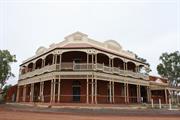
Cnr Kane & Station Sts Gwalia
Sons of Gwalia Mine Office
Leonora
Goldfields
Constructed from 1903
| Type | Status | Date | Documents |
|---|---|---|---|
| State Register | Registered | 29 Jun 1999 | HCWebsite.Listing+ListingDocument, HCWebsite.Listing+ListingDocument |
| Type | Status | Date | Documents |
|---|---|---|---|
| (no listings) |
| Type | Status | Date | Grading/Management | |
|---|---|---|---|---|
| Category | ||||
| Municipal Inventory | Adopted | 17 Feb 1998 | Category 1 | |
| Statewide Hotel Survey | Completed | 01 Nov 1997 | ||
| Classified by the National Trust | Classified | 16 Sep 1974 | ||
| Register of the National Estate | Permanent | 21 Mar 1978 | ||
| Aboriginal Heritage Sites Register | Recorded | |||
01459 Gwalia Townsite Precinct
| Name | Type | Year From | Year To |
|---|---|---|---|
| W E Robertson | Architect | - | - |
Individual Building or Group
| Epoch | General | Specific |
|---|---|---|
| Original Use | COMMERCIAL | Hotel, Tavern or Inn |
| Present Use | MINING | Mine Office |
| Style |
|---|
| Federation Filigree |
| Type | General | Specific |
|---|---|---|
| Roof | METAL | Corrugated Iron |
| Wall | BRICK | Common Brick |
| General | Specific |
|---|---|
| OCCUPATIONS | Hospitality industry & tourism |
This information is provided voluntarily as a public service. The information provided is made available in good faith and is derived from sources believed to be reliable and accurate. However, the information is provided solely on the basis that readers will be responsible for making their own assessment of the matters discussed herein and are advised to verify all relevant representations, statements and information.
The place is of architectural significance, a superb example of the "Australian Hotel". Built on freehold land, originally a State Hotel it was sold to the Gwalia community in 1960. It closed its doors in 1964 when the Sons of Gwalia Gold Mine closed. It was one of seven hotels in Gwalia in the early 1900's and is the last remaining. It has been faithfully and excellently restored by a Mining Company who use it as their regional office.
2 storey brick building, verandahs on 2 sides. Contains 10 upstairs bedrooms, 4 ground floor bars, dining room, lounge, kitchen etc Outside galvanised iron staff quarters, large external bear garden. All rooms with variety of pressed metal ceilings. Ornate external timber trim. Internal joinery ornate. First State Hotel in WA, carefully restored and maintained by Western Mining Corporation
Assessment 1974 Construction 1902-03 Builder believed to be the eventual builder of the Adelphi Hotel.
This information is provided voluntarily as a public service. The information provided is made available in good faith and is derived from sources believed to be reliable and accurate. However, the information is provided solely on the basis that readers will be responsible for making their own assessment of the matters discussed herein and are advised to verify all relevant representations, statements and information.
Constructed from 1903
The place, is a fine example of the Federation Filigree style, combining solid classical details with delicate decorative timber elements, typical of the traditional Australian pub at the turn-of-the-century. With its wrap around verandah, the place is the dominant focal point in the streetscape and is one of a few brick buildings in Gwalia and the most imposing. The place is an important component of a nationally significant townsite. The place was the State Government's first venture into the construction and management of hotels, and as such represents a particular phase in State Government policy. The place contributes to the community's sense of place, being the most substantial and imposing building in Gwalia, a town that is becoming increasingly more popular as a tourist destination, serving as a demonstration of the layout and function of a gold mining township. The place demonstrates rare aspects of the cultural heritage significance at a national level because the historical importance of the mine, the social distinctiveness of die community, and the diversity of physical evidence within a small area, are a combination not equalled in Australia.
The building is a two-storey building in Federation Filigree style located at the building line on the corner of Kane and Station Streets. The building is constructed of brick laid in stretcher bond, with a corrugated iron clad roof concealed behind a heavily moulded parapet.
The former State Hotel is a two-storey brick and iron building, with a two-storey verandah, constructed in 1903 by the State Government to provide a controlled hotel facility for the miners of Gwalia.1 The distance between Gwalia and Leonora (2km) led, in many cases, to the provision of separate facilities for each settlement. In 1903, this, in part, led the State Government to take the unusual step of building the State Hotel to provide Gwalia with a licensed premises, and to lessen the sly-grog trade. "... as a last resource, the Government decided to initiate the experiment of a State-owner hotel."2 It was the Government's first involvement in such a venture. Mr W.E. Robertson, an architect in practice in Perth, was asked to prepare plans, which were accepted. The building was more elaborate and expensive than the Government had envisaged, 'but the licensing bench insisted that if the Government wished to obtain a license it was but fair that the hotel they proposed to erect should equal in every way the plans submitted by other applicants".3 The hotel was opened to the public on 3 June 1903, the cost of construction, including furnishings, amounting to £5,429/14/9.4 The hotel was described at the time of opening as follows: The hotel is two-storeyed and is built of brick, with a 10ft balcony running around the front and eastern sides. At the rear there is a private balcony for the use of the boarders. On the ground floor are nine rooms. The opens towards the railway station. Its counter is • of polished jarrah, and is pilastered, and panelled artistically. The saloon bar has been created similarly. The Government has evidently given precedence to West Australian woods, the staircase in the main hall being an elaborate piece of work of polished jarrah, and the contractors have in the whole of these fittings shown what expert tradesmen can do with colonial woods. ^ A description of the layout of the hotel is provided in another newspaper. ... to contain a billiard-room 25ft x 20ft, bar-room 25ft. x 18ft. saloon bar which, however, was subsequently deemed superfluous, and was used as a smoking-room for guests and as an office, dining room 25ft x 18ft., pantry, store-room, kitchen, and scullery on the ground floor; while on the upper storey provision was made for a drawing-room, three single and three double bedrooms with separate quarters for servants over the dining-room, as well as a bathroom. The yard was enclosed with galvanised iron, within which were sited a stable and out-offices. Contractors for the job were Messrs. Gamel and Trim (sic), and contract price being £4,800.7 The painter in charge was Mr James Blight. Upon opening, the hotel was under the management of Mr Robins, who, with his wife, selected the furnishings. Owned by the State Government, the hotel operated under strict rales and regulations: opening hours were strictly adhered to; alcohol quality was monitored so as to retain a high standard; prices were regulated; and, drunken behaviour were not tolerated. Despite Hie popularity of the State Hotel, the conditions were not always viewed as acceptable by certain patrons. In August 1911, an addition to the Station Street elevation, together with new latrines was completed.8 Although designed for use as a library and reading room, it was thought the new room could be better utilised as a public bar and billiard room, with the small parlour converted to a library. In the final days of the 1913 Parliamentary session Premier Scaddan introduced a Government Trading Concerns Bill, which empowered the Government to obtain money to start commercial enterprises of its own. As well as hotels the State Government controlled a state shipping service, saw mills, dairy, ferries, abattoir etc. Other Government financed and operated hotels were established in Kwolyin (1913), Bruce Rock (1913), Wongan Hills (1914), Corrigin(1915) and Bolgart(1915).9 In March 1919, the State Hotel was subject to a 'beer strike' when a group of miners agreed to boycott the hotel until their demands for improved conditions were met.10 In June 1959, Gwalia residents signed a petition against the State's proposed sale of the State Hotel. In the early 1960s, the Government's interest in hotels waned and a number of communities looked to taking over the hotels themselves. In Gwalia, after protracted negotiations, the Gwalia community Co. Ltd bought/leased the hotel in 1960 for £18,000.11 The State Hotel continued to be used as a hotel up until the mid-1960s. After the mine's closure inl963, Gwalia was nearly deserted, although a number of its building remained. The State Hotel was closed on 17 January 1964, in a town that by then had only 40 residents. The building is believed to have been unoccupied until the early 1980s, the resurgence of mining at 'Sons of Gwalia' in the 1980s led to the restoration and conversion of the former State Hotel by lessee Western Mining Corporation for its use as an administration office by Sons of Gwalia N.L. The first floor provides accommodation. On the ground floor the bar counter has been removed to accommodate modern office requirements. The bar fittings and fixtures were removed by vandals during the time the building was unoccupied.
INTEGRITY: High AUTHENTICITY: High
Good
| Name | Type | Year From | Year To |
|---|---|---|---|
| Mr W.E. Robertson | Architect | 1903 | - |
| Ref ID No | Ref Name | Ref Source | Ref Date |
|---|---|---|---|
| "Kalgoorlie Miner". p.3 | 5 June 1903 | ||
| "Morning Herald". p.5 | 28 September 1903, | ||
| AN 15/1, Acc 981, File 566/1915, | 'Gwalia State Hotel, Building File', | WAPRO | |
| The contractors could also be known as Gamble and Trim. | |||
| Bell l, P., Connell, J., McCarthy, J; "Gwalia Conservation Study". | State Heritage Branch, Department of Environment and Planning, Adelaide | July 1995 | |
| AN 15/1, Acc 981, File 59/1919, | 'Gwalia State Hotel, Beer strikes and industrial troubles', p.14 | WAPRO | |
| HCWA, register assessment documentation. | State Heritage Office | ||
| "West Australian". p.5 | 22 November 1960; |
| Owner | Category |
|---|---|
| St Barabara Mines Ltd | Other Private |
This information is provided voluntarily as a public service. The information provided is made available in good faith and is derived from sources believed to be reliable and accurate. However, the information is provided solely on the basis that readers will be responsible for making their own assessment of the matters discussed herein and are advised to verify all relevant representations, statements and information.
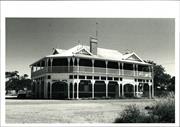
Railway St Kwolyin
Bruce Rock
Wheatbelt
Constructed from 1914
| Type | Status | Date | Documents |
|---|---|---|---|
| (no listings) |
| Type | Status | Date | Documents |
|---|---|---|---|
| (no listings) |
| Type | Status | Date | Grading/Management | |
|---|---|---|---|---|
| Category | ||||
| Municipal Inventory | Adopted | 11 Sep 1997 | Category 5 | |
Individual Building or Group
| Epoch | General | Specific |
|---|---|---|
| Present Use | VACANT\UNUSED | Vacant\Unused |
| Original Use | COMMERCIAL | Hotel, Tavern or Inn |
| General | Specific |
|---|---|
| OCCUPATIONS | Hospitality industry & tourism |
This information is provided voluntarily as a public service. The information provided is made available in good faith and is derived from sources believed to be reliable and accurate. However, the information is provided solely on the basis that readers will be responsible for making their own assessment of the matters discussed herein and are advised to verify all relevant representations, statements and information.
Constructed from 1914
10875 Kwolyin Townsite
The site demonstartes associations with pioneers of the area and is representative of the development of Kwolyin. It represents a way of life no longer practised.
Two storey brick construction. First floor verandahs extend around the two street frontages and form a colonnade at street level. The entry is located at the truncated corner. The corrugated iron roof was hipped with the verandah under the main roof and gable features. The hotel design and construction was typical of many State Hotels which were constructed during that period. The hotel was located on 1/2 acre of land opposite the Kwolyin Railway Station.
As early as 1912, Hubert Robins has applied for a liquor license in Nunagin. The application was withdrawn due to a technical omission of exact locality and later presented to the Northam licensing Court in 1913, by which time the Premier (Scadden) had sought approval for a state hotel at Nunagin. The Railway line through from Quairading had opened in Bruce Rock in March 1913 and connected through to Merredin by December that year. On the 17th June 1913, the town of Bruce Rock was gazetted and on the 24th June approval was granted for a State Hotel at Nunagin (Bruce Rock) and Kwolyin. By August the plans for the then Bruce Rock Hotel had been submitted and both the Kwolyin and Bruce Rock Hotels were built simultaneously, with the Kwolyin Hotel opened the year of the bad drought throughout the district and the onset of WWI. The hotel was the hub of the Kwolyin town and surrounding community. It was particularly important as a social centre after the Kwolyin Hall was demolished. The hotel was tragically destroyed by fire in 1992.
Site only
| Ref ID No | Ref Name | Ref Source | Ref Date |
|---|---|---|---|
| JK Ewers;"Bruce Rock the story of a District". | Bruce Rock District Road Board. | 1959 | |
| A Lovell;"Bruce Rock A Revised History". | Shire of Bruce Rock | 1993 |
| Owner | Category |
|---|---|
| J & ALC Koentjoro | Other Private |
This information is provided voluntarily as a public service. The information provided is made available in good faith and is derived from sources believed to be reliable and accurate. However, the information is provided solely on the basis that readers will be responsible for making their own assessment of the matters discussed herein and are advised to verify all relevant representations, statements and information.
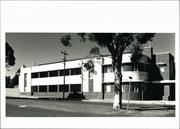
Cnr Fenton & Quinlan Sts Wongan Hills
Wongan Hills Civic Hotel
Wongan-Ballidu
Wheatbelt
Constructed from 1940
| Type | Status | Date | Documents |
|---|---|---|---|
| (no listings) |
| Type | Status | Date | Documents |
|---|---|---|---|
| RHP - To be assessed | Current | 28 Feb 2003 |
| Type | Status | Date | Grading/Management | |
|---|---|---|---|---|
| Category | ||||
| Classified by the National Trust | Classified | 13 Dec 1999 | ||
| Municipal Inventory | Adopted | 17 Sep 1997 | Category 2 | |
· The place is an important example of a State and community owned establishment. The place preserves its importance within the community and contributes to their sense of place.
· The place has aesthetic significance and is a landmark within the township. The place is a fine example of the work of PWD architect A.E. Clare and a rare example of the Nautical/Streamline Moderne Version of Art Deco Architecture.
· The place was built on the site and used the bricks from the first hotel established in Wongan Hills.
· The place was converted to a hospital during WW2.
· The place was built by Brown & Norman.
Substantial two-storey brick construction on corner location. Two street fronts feature horizontal rendered balustrade contrasted by corner block (vertical) and sweeping corner curves.
In 1910, the Progress Association, with support from the Attorney General and the police, opposed the original plans for a Hotel in Wongan Hills. The Railway was officially opened in Wongan Hills on 22nd August, 1911. The subsequent development of the town made the lack of amenities increasingly apparent. Calls for the construction of a hotel continued. By 1913, the Progress Association retracted its previous disapproval. The original State Hotel was constructed during 1914. Development of the town and its surrounding areas quickly demonstrated the inadequacy of the Hotel. By 1939, plans for a new State Hotel were being prepared by architects in the Public Works Department under the supervision of A.E. Clare. The building was designed in the Nautical/Streamline Moderne Version of Art Deco architecture, built in a unique V shape. Demolition of the original building began in 1940. The builders for the project were Brown and Norman of Albany, who oversaw the salvaging, cleaning and recycling of the old bricks for the new Hotel. In 1940, the C.W.A requested the Roads Board divert Hotel fundraising towards the war effort and the conversion of the Hotel into hospital facilities was made possible. The Hotel was officially opened with a luncheon party on 14th November, 1941. In 1958 the Roads Board purchased the Hotel from State Cabinet. On 17th July, 1959, the Wongan Hills was officially declared a community owned establishment, by the Minister for Industrial Development. Mr. Brown was one of the original shareholders in the Hotel that he had built. Mr Stan Sadler chaired the committee that ran the Hotel until 1979. The Hotel underwent several alterations, including the construction of 10 motel units alongside in 1965, and a 1975 extension to enlarge the bar areas and incorporate a function room. The Hotel continues to run in this capacity.
High
Sound
Individual Building or Group
| Epoch | General | Specific |
|---|---|---|
| Present Use | COMMERCIAL | Hotel, Tavern or Inn |
| Original Use | COMMERCIAL | Hotel, Tavern or Inn |
| Style |
|---|
| Other Style |
| Inter-War Art Deco |
| Inter-War Functionalist |
| Type | General | Specific |
|---|---|---|
| Wall | BRICK | Common Brick |
| Roof | TILE | Terracotta Tile |
| General | Specific |
|---|---|
| OCCUPATIONS | Hospitality industry & tourism |
This information is provided voluntarily as a public service. The information provided is made available in good faith and is derived from sources believed to be reliable and accurate. However, the information is provided solely on the basis that readers will be responsible for making their own assessment of the matters discussed herein and are advised to verify all relevant representations, statements and information.
Constructed from 1940
The site represents a way of life no longer practiced. The place demonstrates ways of life and associations with war, the development of Wongan Hills, and civic identities. The place represents a "sense of place". It is a critical element in the main street streetscape of Wongan Hills, and is integral within the townscape and character of Wongan Hills. It is a fine and rare example of 1940s hotel architecture designed by the Public Works Department. The integrity and authenticity of the place which demonstrates the design ethos and details of the art deco influence of the period is significant.
Brick construction with a terracotta hip tiled roof. The double storey building has verandahs along the first floor of both street frontages. Rendered with horizontal incised banding, they replicate the parapet. The corner of the hotel is curved and the parapet detail continues around the curve which is balanced by the vertical red brick block over the entry of the guest accomodation.
HOSPITALITY In December 1910, the first move was made to have a hotel in Wongan Hills, with the attempt to transfer the licence from the "Clackline Arms" to Wongan Hills. There was a community objection to a hotel in Wongan Hills, and the Progress Association resolved to disallow a hotel until such time that the townsite was surveyed. They were supported by the Attorney General who had been advised by the Police, who had been instructed to oppose the Hotel. WH Ackland was secretary of the Melbourne Roads Board, and he forwarded information to his son RRB Ackland in Northam, to enlist support in the form of a petition from the Northam residents against the Wongan Hills Hotel. Ackland found that the three solicitors in town had been briefed for the transfer applicants, but was fortunate enough to retain a York solicitor who subsequently determined that Wongan Hills was in the jurisdiction of the Northam Court. With the Railway reaching Wongan Hills in 1911, the town developed and a shortage of amenities was apparent. The Progress Association requested a State Hotel and the town survey included blocks for a hotel. By 1913 the need was critical and it was a concern that if no State Hotel was constructed, the land may become available to private enterprise. During 1914 the hotel was built at a cost of £2800 (at that time the Agricultural Hall was being constructed for £300). It was built on lots 133 and 134, and a billiard saloon operated by J Bennett, occupied lot 135. With the rapid development of the town and the land north of town, there was an influx of travellers, and the hotel proved to be inadequate in a short time. The Roads Board constantly requested improvements and extensions to the State Hotel, and in desperation suggested that the hotel be leased. In September 1939 plans for the new State Hotel were being prepared by the Architects in the Public Works Department, and the Roads Board was asked to guarantee the water and sewerage supplies. In 1940 the CWA asked the Roads Board to divert hotel fundraising to the war effort. In 1940 arrangements were put in place should the hotel be needed as a hospital, and in 1941 blackouts were introduced. When water shortages occurred in the late 1940s the hotel was forced to rely on a bore and water carted by the Railway Department. In May 1958 State Cabinet offered to sell the State Hotel to a proper civic authority. The Roads Board was accepted and a Committee of management was appointed. On 17 July 1959, the Wongan Hills Civic Hotel was officially declared a community owned establishment, by the then Minister for Industrial Development, Charles Court. In 1980, the hotel was acquired by private interests.
Good
| Name | Type | Year From | Year To |
|---|---|---|---|
| AE Claer (PWD) | Architect | 1940 | - |
| Ref ID No | Ref Name | Ref Source | Ref Date |
|---|---|---|---|
| ACKLAND RRB; "Wongan Ballidu Pioneering Days ". | Shire of Wongan-Balidu | 1965 |
This information is provided voluntarily as a public service. The information provided is made available in good faith and is derived from sources believed to be reliable and accurate. However, the information is provided solely on the basis that readers will be responsible for making their own assessment of the matters discussed herein and are advised to verify all relevant representations, statements and information.