Local Government
Busselton
Region
South West
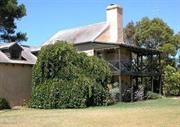
770 Layman Rd Wonnerup
St Mary's Church Hall is at 12 Lockville Rd, Wonnerup
Busselton
South West
Constructed from 1910, Constructed from 1850, Constructed from 1846 to 1905
| Type | Status | Date | Documents |
|---|---|---|---|
| Heritage List | Adopted | 16 Oct 2024 | |
| Heritage List | YES | 13 Aug 2014 | |
| Heritage Agreement | YES | 19 Aug 2014 | HCWebsite.Listing+ListingDocument |
| Type | Status | Date | Documents |
|---|---|---|---|
| RHP - To be assessed | Current | 26 Aug 2011 |
| Type | Status | Date | Grading/Management | |
|---|---|---|---|---|
| Category | ||||
| Municipal Inventory | Adopted | 20 Jun 1996 | Category 1 | |
| Local Heritage Survey | YES | 16 Oct 2024 | Category 1 | |
| Register of the National Estate | Permanent | 21 Oct 1980 | ||
| Classified by the National Trust | Classified | 12 Jun 1968 | ||
• The place has historic value for its associations with the Locke family, who were significant in the development of Wonnerup and also well known in the race industry. It was originally built by John Locke, one of the pioneers who arrived from the failed Australian settlement scheme of 1842. • The place has historic value for its association with the Reynolds family who were prominent leaders in the Wonnerup community. • The place has some potential to reveal archaeological finds from the activities of the farm since the mid 19th century. • The buildings’ strategic location along the Layman Road on the Vasse Estuary contributes to community’s sense of place for their longevity in the landscape.
Lockville Farmhouse’s original building was built of lathe and plaster, a two roomed structure (still extant) and named Sion House. The later two-storey addition was added in limestone c1860. A large weatherboard addition c1870s with a Mudroom is attached to the original c1846 building and has a large attic space that was used for storing hay. An original single storey dairy now joins the kitchen and together the structures form a u- shaped courtyard. The complex of buildings are located within a flat landscaped site that features many mature trees.
John Bavage Locke 1825-1870) arrived age seventeen from Bath on the ship Trusty in 1842 accompanied by his father John, mother Maria, brother Henry and sisters Elizabeth and Charlotte. John Locke and his family were amongst the earliest pioneers to settle at Australind from London in the Australind Settlement that was based on Edward G. Wakefield’s theory of Systematic Colonization principles. Ultimately the settlement failed and the Lockes moved away from the area. In 1837, Lieutenant Bunbury surveyed an area including the land at Wonnerup for potential development, however ten years later the idea of settlement at Wonnerup was abandoned as it was considered to be too wet. Despite this fact, John Bavage Locke left the failing Australind settlement in c1846 and took up 120ha land on the Vasse River in the townsite of Wonnerup and named his landholding 'Lockville'. Soon after he constructed the first portion of the buildings on the property, a lathe and plaster two room weatherboard building and named it 'Sion House'. This name originates with the biblical reference to the City of Jerusalem, or more broadly a perfect or ideal place. John married Mary Layman (1836-1888), daughter of his neighbour, George Layman from Wonnerup House in 1854 and together they had nine children. In c1860, together with Ticket-of-Leave labour, John Locke built the two storey limestone portion of the house, probably to accommodate the growing family. Lockville was used primarily for breeding horses and the Locke family also successfully raced many of their horses. Of note were wins in the Moonee Valley Cup, the Melbourne Plate and the Perth Town Plate. They also supplied horses to the East India Company for remounts. In 1870, John Bavage Locke died. In 1871, the Western Australian Timber Company received a timber concession at Lockville and a large mill was built nearby. It was around this time that the weatherboard section was built adjoining the two storey portion of the house.
High/High
Good
| Ref Number | Description |
|---|---|
| PN094 | COB Reference |
Individual Building or Group
| Epoch | General | Specific |
|---|---|---|
| Original Use | FARMING\PASTORAL | Shed or Barn |
| Original Use | FARMING\PASTORAL | Homestead |
| Present Use | RESIDENTIAL | Two storey residence |
| Original Use | SOCIAL\RECREATIONAL | Other Community Hall\Centre |
| Style |
|---|
| Victorian Georgian |
| Type | General | Specific |
|---|---|---|
| Wall | EARTH | Wattle and Daub |
| Roof | METAL | Corrugated Iron |
| Wall | TIMBER | Weatherboard |
| Wall | STONE | Limestone |
| General | Specific |
|---|---|
| OCCUPATIONS | Grazing, pastoralism & dairying |
| PEOPLE | Early settlers |
This information is provided voluntarily as a public service. The information provided is made available in good faith and is derived from sources believed to be reliable and accurate. However, the information is provided solely on the basis that readers will be responsible for making their own assessment of the matters discussed herein and are advised to verify all relevant representations, statements and information.