Local Government
Swan
Region
Metropolitan
Lot 1740 Great Eastern Hwy Midland
Municipal Inventory No: 52
Midland Junction War Memorial WWI
Swan
Metropolitan
Constructed from 1906 to 1923, Constructed from 1906
| Type | Status | Date | Documents |
|---|---|---|---|
| Heritage List | Adopted | 30 Aug 2017 | |
| Heritage List | Adopted | 08 Apr 2026 | |
| State Register | Registered | 09 Feb 1996 | HCWebsite.Listing+ListingDocument, HCWebsite.Listing+ListingDocument |
| Type | Status | Date | Documents |
|---|---|---|---|
| (no listings) |
| Type | Status | Date | Grading/Management | |
|---|---|---|---|---|
| Category | ||||
| Municipal Inventory | YES | 31 Dec 2012 | Exceptional Significance | |
| Classified by the National Trust | Classified | 07 Dec 1987 | ||
| Register of the National Estate | Permanent | 22 Jun 1993 | ||
| Statewide War Memorial Survey | Completed | 01 May 1996 | ||
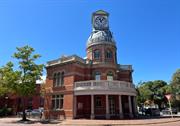
Midland Town Hall, a two-storey brick building with central dome and colonnaded circular entrance, has cultural heritage significance for the following reasons: • The place is a landmark at the junction of Great Eastern and Great Northern Highways, and it impacts on important vistas which contribute to the cultural environs and identity of Midland. • The place possesses social value as the former centre of local government and the venue for community functions, meetings, and social gatherings; the construction of the clock tower above the dome is believed to be unique in Western Australia. • The place has historic value as an integral component of the former civic heart of Midland, comprising Midland Town Hall (1906-1907, 1923-1924), Midland Post Office (1913), and Midland Courthouse; (1907) as the centre of local government and community events, it illustrates the expansion and development of Midland. • The dominant location, unusual form and scale of the place contributes to the community’s sense of place, it is easily recognisable and visible from various locations in Midland. • The place has a close association with the Midland Junction Town Council, and the architects R. M. Hamilton and F. W. Upton. • The place is representative of a public building built at the beginning of the twentieth century and its stylistic qualities and design identify it as being characteristic of its class. • The place has scientific value for the potential of its design, fabric, and contents to contribute to the understanding of similar building types; and, • The general intactness and integrity of the place is rare.
Midland Town Hall is within the civic precinct bounded to the northwest by Great Northern Highway (formerly Newcastle Road), to the south by Great Eastern Highway (formerly York Road) and to the east by Helena Street. The precinct includes Midland Post Office, (1913), Midland Courthouse (1907) and formerly the Carnegie Library (1912), places Midland Town Hall in an historic precinct which once formed the civic heart of the town. This siting is significant in the townscape of Midland as it is the junction between the main highways heading north and east from Perth. The triangular site of Midland Town Hall is integral to the design of the building. Midland Town Hall addresses the corner of Great Eastern Highway and Great Northern Highway, unlike most buildings which front one street. However, it is not unique as a ‘corner’ town hall, Fremantle Town Hall (1885) and York Town Hall (1911) also addresses the junction of two streets. The building comprises two storeys, with an extra room on the second floor below the central dome. The corner element, which is crucial to the design and aesthetic value of the building, consists of a colonnaded circular entrance lobby on the ground floor and the mayor’s parlour directly above it on the first floor. The room above the mayor’s parlour now contains the supporting structure for the clock which was added in 1923. A circular entrance lobby on the ground floor leads to various offices. The main hall is located at the back of the building and includes the stage and gallery. The council chamber and other offices are located on the first floor. The building is constructed of solid brick walls, the public facades are tuck pointed. Early photographs clearly illustrate the masonry as exposed; however, the majority of the brickwork is now painted a terracotta colour and stone detailing has been painted cream. A small amount of exposed brickwork remains on the eastern facade. A smooth cement render has been applied to sections of the external walls. Small valleys and hidden gutters that are easily blocked cause the roof to leak in heavy rain and has caused damage to internal plasterwork. This has not been caused by changes of roofing materials but is a result of the complex design. The 1923-1924 addition to the east of the building comprise of the entrance lobby to the main hall, the lesser hall on the first floor, the shop facing Great Eastern Highway and various other small rooms. The clock above the dome was not part of the original design but was added fifteen years later. The following information section provides an update as of 2023. Following conservation works between 1995 and 2000, the external brickwork is once again exposed following the removal of previous paint work. The works also included the reinstatement of original detail to the dome.
Midland is located 18 kilometres north east of Perth by road. The Midland Railway Company commenced construction work in 1886 and a tent village developed in the current location of the town of Midland. The new town, at the junction of the ‘iron roads’, was proclaimed and named ‘Helena Vale’ in December 1895. In March 1899, Reserve No. 5178 (Town Hall Site) was set apart for municipal purposes. In November 1900, ratepayers voted to change the name of the municipality from ‘Helena Vale’ to ‘Midland Junction’. In July 1901, Swan Location 1740 was granted to the Mayor and Councillors of the Municipality of Midland Junction for use as a Town Hall site, under the Land Act of 1898. From 1902, the area was used for public gatherings, despite the absence of a building. In December 1903, the Midland Junction Municipal Council moved to form a sub-committee to consider the erection of a Town Hall. In April 1904, a special meeting of the Midland Junction Council was held. It was decided that the cost of the Town Hall should not exceed £6000, that the Government was to be approached for subsidies and the prospect of holding a design competition was discussed. In January 1905, designs were invited for Midland Junction Town Hall (now known as Midland Town Hall) in the Western Australian Mining Building and Engineering Journal.. Nine designs were received, and R. M. Hamilton and F. W. Upton were announced as the winners of the competition in April 1905. George Temple Poole, former Chief Architect of the Public Works Department, was placed second. Tenders were called for the building in February 1906. Messrs. Kerr and Pitt were appointed as contractors. The foundation stone was laid on 24 April 1906 by the Premier, Mr Rason, and seconded by Mayor W. R. Crosbie. The Grand Opening Ceremony was held on 23 January 1907 and officially opened by the Premier, Mr Moore. Events and activities associated with local government, community meetings, social gatherings and entertainment were held at Midland Junction Town Hall. During the First World War, the balcony of the Mayor’s Parlour was used to read out news of the War’s progress to people gathered below. Memorial services for both World Wars were held at Midland Junction Town Hall. In November 1923, the clock turret on top of the dome of Midland Junction Town Hall was unveiled as a Soldiers War Memorial by Governor Newdegate to commemorate soldiers in World War One. It is believed that the clock was intended for the Midland Post Office, however when it was decided by the Head post office that only Main post offices were to be fitted with clocks, it was decided to install the clock in Midland Junction Town Hall as a war memorial. The addition to the Midland Junction Town Hall, designed by the architect Fred W. Upton, commenced in 1923. The addition included a new entrance lobby to the main hall, a lesser hall built on the first floor, a shop and other small rooms including a lighting room for the stage. A completion plaque on building states that the addition was completed in 1923, however Council minutes record that building was not completed until January 1924. In 1954, toilets and an escape stair were added to the building. In 1961, the ‘Midland Junction Municipal Council’ was renamed ‘Midland Town Council’. From this time onwards, Midland Junction Town Hall was known as Midland Town Hall. In 1968, the Meckering earthquake caused damage to Midland Town Hall. The building was in a dilapidated. state and came under threat of demolition. The adjacent Carnegie Library (1912) was demolished as a result of earthquake damage. In 1970, the Midland Town Council merged with the Swan-Guildford Shire Council and the town hall functions were transferred to the Shire of Swan’s Administration Centre in Middle Swan. In October 1973, Midland Town Hall was re-opened for community use after restoration was undertaken with a $35,000 interest free loan granted by the Premier, Mr Tonkin. The restoration was prompted by public pressure. Midland Town Hall was painted in 1984. In October 1995, the Development Committee of the Heritage Council accepted a development proposal illustrating a program of conservation works and minor alterations to the Midland Town Hall. A conservation plan was prepared for Midland Town Hall in 1993 forming the basis of conservation works carried out in two stages between 1995 and 2000.
Integrity - High Authenticity - High
Good
| Name | Type | Year From | Year To |
|---|---|---|---|
| Beasley, Hilson, Alfred Ede | Architect | - | - |
| Library Id | Title | Medium | Year Of Publication |
|---|---|---|---|
| 876 | Midland Town Hall, Midland: conservation plan. | Heritage Study {Cons'n Plan} | 1993 |
| 1279 | Midland town hall preliminary presentation | Report | 1992 |
| 12072 | Midland Town Hall | Heritage Study {Cons'n Plan} | 2009 |
Individual Building or Group
| Epoch | General | Specific |
|---|---|---|
| Original Use | GOVERNMENTAL | Town, Shire or District Hall |
| Present Use | GOVERNMENTAL | Town, Shire or District Hall |
| Original Use | MONUMENT\CEMETERY | Monument |
| Type | General | Specific |
|---|---|---|
| Wall | BRICK | Common Brick |
| Roof | TILE | Ceramic Tile |
| General | Specific |
|---|---|
| SOCIAL & CIVIC ACTIVITIES | Government & politics |
| OUTSIDE INFLUENCES | World Wars & other wars |
This information is provided voluntarily as a public service. The information provided is made available in good faith and is derived from sources believed to be reliable and accurate. However, the information is provided solely on the basis that readers will be responsible for making their own assessment of the matters discussed herein and are advised to verify all relevant representations, statements and information.