Local Government
Vincent
Region
Metropolitan
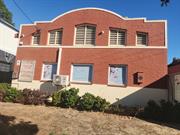
21 Vincent St Mount Lawley
Vincent
Metropolitan
Constructed from 1954
| Type | Status | Date | Documents |
|---|---|---|---|
| Heritage List | Completed\Draft | 09 Dec 2025 |
| Type | Status | Date | Documents |
|---|---|---|---|
| (no listings) |
| Type | Status | Date | Grading/Management | |
|---|---|---|---|---|
| Category | ||||
| Local Heritage Survey | Completed\Draft | 09 Dec 2025 | Category 2 | |
The former substation has some aesthetic value as a good example of a municipal building constructed in the Inter-War Functionalist style. The former substation has considerable historic value as a physical record of Perth’s tram and trolley bus transportation system that operated in Perth from 1899 to 1969 and contributed significantly to the development of the suburbs within the City of Vincent. The former substation has considerable rarity value as one of few remaining physical structures associated with the tram and trolley bus transportation system located within the City of Vincent.
The former tram substation is a brick and iron building which is constructed in the interwar Functionalist style although being constructed in the period following World War Two. The building is set back approximately eight metres from the street and is sited to the west of the block at a slight right angle to Vincent Street. The symmetrical principle façade has a stepped parapet wall with a large rounded apex in the centre. Three small windows line the principle façade with an array of five roof ventilators representing the structure of the Skillion roof behind the parapet. The brickwork is rendered up to dado with the rest of the bricks painted a shade of red. Render detailing outlines the parapet wall's edges. The main entrance is under a cantilevered patio roof and is identifiable by two large painted timber doors, assumed to be from the original station.
The first tramline in Perth opened on 28 September 1899 from the eastern end of Hay Street to Thomas Street in West Perth with further tramlines following suit along the early growth corridors of Perth in Mount Lawley, Subiaco, North Perth, Leederville, Victoria Park and Nedlands. Trams played a major role in the public transport system in Perth for almost 60 years with the 1920's seeing the greatest tramway extensions and the last major tramway constructed in 1930 when a single track was laid along Guilford Road to Ferguson Street, Maylands. Initially the tramways were owned and administered privately, however in 1912 the State government of Western Australia compulsory acquired the purchase rights for the tramway system under the Tramways Purchasing Act 1912. This Act effectively made redundant all contractual agreements between the tramway company and the various local authorities and included a provision for the councils to be paid three per cent of gross earnings and to use the electricity poles for street lighting. However for these privileges the local government authorities had to repair and maintain the tracks. Trams continued to be a popular form of transport throughout the Inter-war years however the unexpected growth of motor transport saw the demise of the tramway system with the first dismantling of the Perth tramway network beginning in 1948 with the closure of the Osborne Park route. The closure of the Oxford Street, Leederville and Mount Lawley - North Perth lines in November 1953 it looked like the end was in sight for trams in Perth. To consolidate this move towards dismantling the tramways system the Metropolitan Transport Trust was formed in November 1957. Its prime task was to coordinate government bus services, which initially included the electric ones, and to close the remaining tram lines. In January 1958 the Minister for Transport made a public announcement that all tram services were to cease with the last tram run in Perth making its run to Inglewood on 19 July 1958. Another form of public transport that took hold in Perth during the Inter-war years was the trolley bus service. The first permanent installation of the trolley bus in Australia was opened in Perth in October 1933 when the tramline from East Perth to the City was converted with an extension to West Leederville train station, a distance of 4.52 miles. The trolleybus reached its maximum capacity in 1958 with approximately 21 miles of route. Trolley buses were similar to trams in that they were also powered by electrical wires, however were considered more manoeuvrable in city and suburban traffic. Although initially viewed as an improvement to the tram, the trolley buses were still restricted to the overhead electrical wires and required electrical sub stations. Furthermore with the increasing availability of the motor car and the diesel powered bus during the post war years the trolley bus did not in fact remain operational much longer than the tram. The last trolley bus to run in Perth was in August 1969. The main source of power for the trams and later trolley bus came from the East Perth Power Station which was constructed in 1916. During this time a substation was constructed in Cook Street, West Perth which was the only attended substation for the trams and trolley buses. This substation was elaborate in design and featured mezzanine floors to accommodate equipment. The substation was demolished after the trams and trolley buses ceased operations in Perth, and replaced with other buildings used by Western Power. Both trams and trolley buses were in operation in areas of Mount Lawley and North Perth throughout the first part of the twentieth century. The power came underground directly from the East Perth Power Station. A survey of the Post Office Directories and the Perth Metropolitan Sewerage Plans indicate that residential development in this section of Vincent Street between Beaufort and William Streets increased in response to the growing population brought about the Gold Boom of the 1890's, instigated further through the Western Australian Government plans show that it was not until 1954 that the former substation at No. 21 Vincent Street, Mount Lawley was constructed initially as a power source for the tram and shortly afterwards for the trolley buses. Power from the East Perth Power Station ran underground to the substation where it was used to power the trolley buses. The substation contained various equipment required to convert the electricity from AC to DC current to power the trams and trolley buses. During the post war period a number of similar substations were constructed including one in Drummond Street, Bedford (1959), Selby Street, Floreat Park (1956), both of which are still extant and have been adapted to alternative uses. The substation in Claremont along Stirling Highway constructed in 1936 to power the trolley buses is also still extant and has been adapted for use by the St John's Ambulance. The substation at No. 21 Vincent Street was converted to a dental surgery in 1990, in which whilst the internal equipment has been removed, much of the original external fabric of the building remains intact.
Integrity Moderate Authenticity High
Good
Individual Building or Group
| Epoch | General | Specific |
|---|---|---|
| Present Use | HEALTH | Other |
| Original Use | Transport\Communications | Road: Other |
| Style |
|---|
| Federation Arts and Crafts |
| Type | General | Specific |
|---|---|---|
| Roof | METAL | Tin |
| Wall | BRICK | Painted Brick |
| Wall | BRICK | Rendered Brick |
| General | Specific |
|---|---|
| Infrastructure | Transport and Communications |
This information is provided voluntarily as a public service. The information provided is made available in good faith and is derived from sources believed to be reliable and accurate. However, the information is provided solely on the basis that readers will be responsible for making their own assessment of the matters discussed herein and are advised to verify all relevant representations, statements and information.