Local Government
Busselton
Region
South West
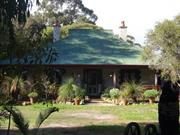
51 Strelly Street Busselton
Lot 18
Busselton
South West
Constructed from 1918
| Type | Status | Date | Documents |
|---|---|---|---|
| Heritage List | YES | 13 Aug 2014 | |
| Heritage List | Adopted | 16 Oct 2024 |
| Type | Status | Date | Documents |
|---|---|---|---|
| (no listings) |
| Type | Status | Date | Grading/Management | |
|---|---|---|---|---|
| Category | ||||
| Local Heritage Survey | YES | 16 Oct 2024 | Category 2 | |
| Municipal Inventory | Adopted | 13 Sep 2006 | Category 2 | |
The place has historic value for its association with the development of Busselton in the early 20th century. The place has social value for the Busselton community as it has been present in the streetscape since the early 20th century and contributes to the community sense of place.
This residence built of limestone with a generous hipped roof clad in corrugated iron is set within an expansive garden setting that includes mature trees and large areas of grass. The roof extends over the external walls to create a verandah on what appears to be three sides of the house which has a simple square floor plan. The roof is punctuated by two rendered brick chimneys and the verandah posts are simple square timber posts with balustrades between. The symetrical front elevation features a central door with fan lights and side lights that appear to be leadlight. The door is flanked by windows with multiple panes, all of the openings appear to have quoining.
Previous research has determined that this place was built by William Lawson Glew (1847-1927) in c1918 for himself and his wife Rose Sheridan (1865-1938). William was born in Lincolnshire, England and settled in Victoria where he married Rose in 1882. By 1895, the family were living in Busselton with three children. William Glew recorded his occupation as a brickmaker in 1904 and the family were living in West Street. By 1918, William Glew was 71 and in entries in the post office directories at around this time he was identified as a labourer and living in Adelaide Street. It is unclear if he would have built this house for himself or on behalf of someone else. When William Glew died in 1927, aged 81, he was recorded as living at 'Craigellachie' which is presumed to be the these premises. Later owners and occupants of this place are recorded as Adam Zanich, who had a market garden and grew tobacco on the property while also working as a sleeper carter. Jack Benstead who had a short Horn cattle stud, and John Lane who operated a milk round from the property. Aerial photographs indicate that later structures have been built on the property, however the form and extent of the original residence can still be easily determined.
High Degree/High Degree Integrity Notes: The place retains a high degree of significance. Authenticity Notes: the place has a high degree of authenticity.
Good
| Ref ID No | Ref Name | Ref Source | Ref Date |
|---|---|---|---|
| COB | 16/10/2024 |
| Ref Number | Description |
|---|---|
| PN178 |
Individual Building or Group
| Epoch | General | Specific |
|---|---|---|
| Original Use | RESIDENTIAL | Single storey residence |
| Present Use | RESIDENTIAL | Single storey residence |
| Style |
|---|
| Federation Bungalow |
| Vernacular |
| Type | General | Specific |
|---|---|---|
| Wall | STONE | Other Stone |
| Roof | METAL | Corrugated Iron |
| Wall | BRICK | Common Brick |
| General | Specific |
|---|---|
| PEOPLE | Early settlers |
This information is provided voluntarily as a public service. The information provided is made available in good faith and is derived from sources believed to be reliable and accurate. However, the information is provided solely on the basis that readers will be responsible for making their own assessment of the matters discussed herein and are advised to verify all relevant representations, statements and information.