Local Government
Albany
Region
Great Southern
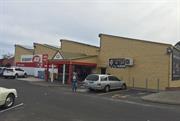
22-32 Proudlove Parade Albany
Dalgety's Wool Shed
Lionetti's Emporio
Sherratt's Family Hotel
Sherratt's Inn
W.G Knight and Son
Albany
Great Southern
Constructed from 1900
| Type | Status | Date | Documents |
|---|---|---|---|
| Heritage List | Adopted | 27 Oct 2020 |
| Type | Status | Date | Documents |
|---|---|---|---|
| (no listings) |
| Type | Status | Date | Grading/Management | |
|---|---|---|---|---|
| Category | ||||
| Municipal Inventory | Adopted | 30 Jun 2001 | Category B | |
| Local Heritage Survey | Adopted | 27 Oct 2020 | Considerable | |
Dalgety’s Wool Warehouse has cultural heritage significance for the following reasons: The place is representative of Albany’s pastoral development and position as a major wool appraisement and sales centre for Western Australia in the 20th century being serviced by an extensive railway network and port. The place is associated with Dalgety & Co. Ltd established in 1884 as a joint-stock company operating all around Australia and later New Zealand and which was a leading firm for many years in the pastoral and wool industry. At the time of its construction the combined warehouse and offices was noted for its architectural features of distinction, its bespoke design, and its use and consideration of the best traditional and contemporary materials and modern approaches to construction, lighting, ventilation and drainage. The place is associated with prominent and well-known West Australian architects Hobbs, Smith and Forbes and W H Jefferis and building contractor J Hawkins and Son. The place has landmark value both for its architectural features as well as its prominent foreshore setting and proximity to and association with a number of significant heritage places and precincts in the Stirling Terrace and Foreshore area. The site on which Dalgety’s was built has high historic value as the original location of Thomas Brooker Sherratt’s warehouse, inn, store and residence, Sherratt being among the first group of British settlers to Albany who also built the first church in Western Australian – the Octagon Church.
Some of the notable features of this place include: • Prominent foreshore setting close to a number of significant heritage places including the Railway Station and Bond Store, RSL Memorial Gardens, the Jubilee Gardens and Rotunda, the Albany Post Office, Albany Jetty and Stirling Terrace Precinct. • Industrial/warehouse design of expansive proportions comprising combined warehouse, store, shed and offices • Timber walls • Prominent sawtooth roof Some obvious modifications include: • Modern signage • Porch over the entry to the supermarket • Operational additions for supermarket (shipping container, lean-to covering)
By the early 20th century Albany’s pastoral development and position as a wool appraisement and sales centre was blossoming. Messrs Dalgety & Co. Ltd had established its Albany branch in 1890 but it wasn’t until near the end of World War I that it was ready to construct its first purpose-built premises which would bring all its services under one roof. The location needed to be near the railway line so that a siding could be constructed into the wool shed. The site selected included Lot B28 at the foot of York Street. This parcel of land already had a long industrial history. It was originally the site of the inn (Sherratt’s Family Hotel), warehouse, store and residence built of stone by Thomas Brooker Sherratt in the 1830s/early-1840s therefore dating back to the very earliest years of British settlement in Albany. Sherratt, who started up a successful whaling and merchant businesses in Albany, is also well-known for having constructed the first church building in Western Australia in Albany – the Octagon Church built in 1835 on the corner of Duke Street and Parade Street. Thomas Brooker Sherratt In 1904, Sherratt’s property was leased by Messrs Sillam and Inglis, bark merchants originally from South Australia, who set up operations for grinding/crushing local mallet bark for shipment, the first operation of its kind in Western Australia. Utilising Sherratt’s original buildings, to the west (closer to the corner of York Street) they also built a new iron shed and a line of rails was laid by the Railway Department to connect to the new building. After the site was secured by Dalgety’s, Hobbs Smith and Forbes of Perth were appointed as the architects, the building contractors were J. Hawkins and Son and local man Mr A Ilanthe was foreman of works. By December 1917 the new wool warehouse for Dalgety’s was reported as nearing completion and very detailed descriptions of the new building were provided in the local papers: The structure is of wood and iron and measures 146ft in length and 116 ft in width. Facing north, in the centre of the street elevation, is a commodious suite of offices. From the back of the offices access is gained to the woolshed by means of a flight of steps,..By means of a saw tooth roof shaped roof, oblique overhead rays of natural light penetrate through reinforced glass windows facing south. The glass extends across the full width of the building at intervals of 27ft. Panels in each series can be opened to reduce the temperature when necessary. At night time numerous powerful electric lights can be switched on. The whole of the interior being colored white still further reflects the soft white light so necessary for effective wool classing…There are no fewer than 17,000 squares of reinforced rolled wire plate glass in the roof. The roof further represents nine tons and a half of galvanised iron, while the timber used consists of 70 tons of karri and 120 tons of jarrah. There are 22,000ft of weatherboard in the walls of the woolshed, and the floor contains three miles and a half of 9in. by 2in. jarrah planking. (Gnowangerup Times, 29 December 1917) The jarrah was used for the floor and the karri was used for the principles. Running around the building was a drain to carry off water and ensure the dry conditions necessary. The reports also noted the front offices, which featured twin flag poles installed to mark the extremities of the office section of the premises which was roofed with square asbestos slates of alternating colors and the close verandahs ‘…over all front windows are also architectural features of distinction’. (Albany Advertiser 22 December 1917) Dalgety’s Wool Warehouse was completed and officially opened early in 1918. In June 1924 it was announced that extensions were going to be made to the premises of Dalgety’s Wool Warehouse, with the architect W H Jefferis appointed to prepare the plans. The extensions involved the addition of a wool store on the railway side of the building to provide ‘…upwards of 5,000 square feet of floor space’ for storage purposes. (Albany Advertiser 28 June 1924) A loop line was also to be installed to serve the new section. In February 1949 a fire broke out twice in two days under the floor of the wool shed. The cause was that the adjacent site was the location of a woodyard and sawdust had been blowing across to and gathering under the shed’s floor. No significant damage was incurred on the shed but a section of the timber wall and floor had to be removed and replaced. Dalgety and Company Limited, registered in London in 1884, was a joint-stock company operating all around Australia and later New Zealand. It was managed by Frederick Gonnerman Dalgety who was the company's first chairman of directors and remained the largest shareholder until his death. Branches were opened in Perth in 1889 and Albany in 1890. From its establishment until the 1940s, the company operated as merchants in rural areas, wool brokers, stock and station and shipping agents. In 1961 the company became Dalgety & New Zealand Loan Limited after merging with the New Zealand Loan & Mercantile Agency Company Limited In the 1980s90s it became Lionetti’s Emporio and represents one of the last examples of the export-import warehouses in the foreshore area east of York St. Lionetti’s converted the old wool shed for modern use as a supermarket and a range of shops. The high profile of the old wool shed was considered in the restoration works made by owner, Paul Lionetti. Lionetti has made a significant contribution to the Albany community as a successful businessman and member and committee person of a number of community groups.
Integrity: Moderate Authenticity: High/Moderate
Good
| Name | Type | Year From | Year To |
|---|---|---|---|
| Hobbs, Smith and Forbes | Architect | - | - |
| W H Jefferis | Architect | 1924 | - |
| Ref ID No | Ref Name | Ref Source | Ref Date |
|---|---|---|---|
| Heritage Database | 1994 | ||
| L Johnson; "Town of Albany Heritage Survey". | City of Albany | 1994 | |
| Heritage TODAY Site visit and Assessment | 1999 | ||
| Australian National University Archives |
Individual Building or Group
| Epoch | General | Specific |
|---|---|---|
| Original Use | COMMERCIAL | Warehouse |
| Present Use | COMMERCIAL | Warehouse |
| General | Specific |
|---|---|
| OCCUPATIONS | Commercial & service industries |
This information is provided voluntarily as a public service. The information provided is made available in good faith and is derived from sources believed to be reliable and accurate. However, the information is provided solely on the basis that readers will be responsible for making their own assessment of the matters discussed herein and are advised to verify all relevant representations, statements and information.