Local Government
Collie
Region
South West
Throssell St Collie
Collie
South West
Constructed from 1990
| Type | Status | Date | Documents |
|---|---|---|---|
| Heritage List | Adopted | 14 Nov 2017 |
| Type | Status | Date | Documents |
|---|---|---|---|
| (no listings) |
| Type | Status | Date | Grading/Management | |
|---|---|---|---|---|
| Category | ||||
| Municipal Inventory | Adopted | 01 Aug 2017 | Considerable significance | |
| Municipal Inventory | Adopted | 30 Apr 1996 | ||
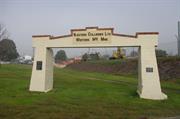
Phoenix Park, 77 Throssell Park has cultural heritage as the site of three memorials commemorating mining and the lives of those who worked and died in the industry.
Open green space opposite the Collie Mineworkers’ Institute on Throssell and Patterson Streets, featuring plaques and memorials related to Collie’s mining history.
1989-1994 was a period of significant change in the Collie coalfields with almost 1000 jobs lost as a result of restructuring and shift changes demanded in mining and power generation industries. The closure of the last remaining underground mine (which was more labour intensive) accentuated the change. It took the community almost a decade to recover from these changes. Phoenix Park was given this name because of its association with the mining industry and was one of a number of parks named in this manner in around 1990. Phoenix was an underground mine operated by the Griffin Coal Mining Company. Phoenix Park was developed during the 1990s and contains three significant memorials: • Coal Miners Skip – 1994 commemorating the closure of the underground mines • Mine Portal – Western Collieries No 1 Mine (1951) Pump Road, Shotts, relocated in 1999. • Mining Deaths Memorial The Memorial was erected by the Collie Retired Miners Association ‘in memory of the people who have lost their lives on the Collie coal fields’. It was unveiled on 5 December 2003 by Mr Mick Murray MLA. Community donations made the project possible with funding from the Miners Welfare Board, Premier Coal, Griffin Coal, the Collie Miners Union and the Collie Shire Council. Phoenix Park was formerly the location of the Bow Cinema which was located within the Collie Mechanics Institute building on Throssell Street. The Institute was located next door to the Municipal Building (now the site of the Shire of Collie offices) and has since been demolished. The site is now known as Phoenix Park (please refer to Place No 035). Prior to 1900 a committee was formed to establish a Mechanics Institute in Collie for which the Government had agreed to provide £250. An initial allocation of land had been made by the Lands Department but the location was the subject of considerable community discord, dividing residents between the eastern and western ends of the town and in January a public meeting resolved to request an alternative site. The Government Gazette of 20 April 1900 describes allocation of Town Lot 521 for the Mechanics’ Institute. In September of that year tenders were called for the construction of ‘a Mechanics Institute (wood) at the Collie’. Completion of the building was delayed but it was in use by Christmas Eve of 1900. The Australian Museum of Motion Picture & Television (Inc) provides a description of the theatre in the Mechanics Institute: In Collie, the Mechanics Institute was built on the south-west corner of the intersection of Patterson and Throssell Sts, and this may have been the venue for the presentations of the Salvation Army Biorama Company which visited the town in October 1900, August 1902, January 1904 and October 1904. In August 1908, improvements were reported to the building: it was painted inside and out and a drop scene with local advertising was painted for the rear of the stage. Many activities were held in the hall, including skating, public meetings, and dances, and the library was important to many people. In October 1908, the hall was used for the performances of the Musical Gardners and Vincents Empire Pictures, which visited the town under the management of Alex F. Wood for two weeks. A month later, when West's pictures were rained out of the Tivoli Gardens, they screened at the Mechanics Institute, and this began a long run of weekly screenings on Tuesday nights by this company. But this did not stop other companies also using the hall for picture screenings. So Morriss's Electric Pictures screened in early 1909, and from 16 April 1909 King's Pictures (like West's, a major Perth company) began regular screenings on Friday nights. These were organised by the committee of the Institute, which felt the need to defend this breaking of West's monopoly in the town: The committee recognise that the people of the town should have an opportunity of utilising the hall and its conveniences - which, by the way, entirely belong to them. The proceeds will be used for further improving the Institute. It is also the committee's intention to make the block of land adjoining the Institute into a "summer garden" where outdoor entertainments may be given during the summer months. (Collie Mail, 10 April 1909) The paper does not report the opening of these gardens, but they must indeed have opened, as over the years more pictures were advertised in this venue. King's Pictures moved to Saturday night on 22 May 1909, and ceased advertising in June that year. West's Tuesday night screenings continued, but moved to the Union Hall from August to November 1909. When they resumed at the Mechanics Institute they renamed the gardens next door West's Picture Gardens. They continued to screen at this venue every Tuesday night in either the hall or the gardens till their Tuesday night screenings were taken over by International Pictures in September 1912. But from December 1910 Delavale's Pictures and concert company had begun a long run of Sunday screenings in the Mechanics Institute. In December 1911, the following cryptic report appeared: Mr Delavale has asked us to announce that he has now entered into arrangements with the Collie Band to show in conjunction with that body. This will mean that in future there will only be one Sunday night show, and that will be held in the open-air gardens, attached to the Mechanics' Institute. The Band contradicts this. (Collie Mail 30 December 1911) In November 1912 International Pictures took over both West's Tuesday nights and Delavale's Sunday nights, and in December they moved to the Coliseum. For a while, no films were screened at the Mechanics Institute - either hall or gardens. Then, in June 1913 the Miners' Union revived screenings in the Mechanics Institute in winter and the gardens in the summer: these Union Pictures screened on Tuesdays, Fridays and Sundays. When Union Pictures moved to the Tivoli gardens over the summer season of 1914-15, the screenings at the Mechanics Institute on Tuesdays, Fridays and Sundays were operated by Mechanics Pictures, with A. Butler as operator, Mrs Harris at the piano, and J.Dailly as manager. This happened again over the following summer, but Union Pictures continued to screen every week (in the Tivoli in summer and the Mechanics Institute in winter). This suggests that the Mechanics Institute Gardens closed at the end of the 1912-13 summer season, but it was not until 5 July 1919 that an advertisement appeared in the Collie Mail, calling for tenders for the purchase of all the galvanised iron and timber on ´that piece of land known as Mechanics Institute Gardens, Throssell St, Collie, also for flat iron and timber on screen and one operating box in gardens.' Screenings in the Mechanics Institute hall continued till late in 1916, then on 16 December 1916 the first advertisements appear for Spot's Pictures and Vaudeville, on Saturdays, Sundays, Tuesdays and Wednesdays. An advertisement on 6 January 1917 explains that ´The Hall has been darkened so we can continue showing at 8 as usual. Punkas are being installed for the Benefit and Comfort of our Patrons'. The venue seems to have been the Mechanics Institute renamed the Empire, and operated in competition with the Tivoli. This is the first show in the town run by Gunning Davis, nicknamed Spot after his white horse S.P.O.T. (pronounced Esspeeohtee). The two were a familiar sight as Davis rode around the streets of the town, playing his trumpet to advertise his shows. In addition to the films, the whole Davis family performed in the vaudeville segments, and the enterprise was very successful. Then, on one occasion, while Davis was riding around on S.P.O.T. he noticed a four-legged hen in a backyard, and persuaded the owner to sell it to him for ten shillings. He added it to the variety bill and it was so successful that he toured the state with it, making enough money to take the whole family to America, where they stayed, still exhibiting the hen in fairgrounds. After Davis left the town, the lease of the Mechanics Institute hall was advertised in January 1920 ´with Piano, Picture Machine, and Screen complete, and all furniture and appliances.' On 21 May 1920 the venue re-appeared under the name of Lyceum Pictures, run by Les Brooks who also ran the picture shows at the Tivoli Theatre. He continued to operate both concurrently until November 1920, then closed the Lyceum till 10 June 1921, when a ´Grand re-opening' was announced. The advertisements for the Lyceum after that were infrequent, and more often for live shows than for pictures, but they continued irregularly: for instance on 2 January 1925 and on 5 June 1925 the Lyceum was advertising its regular screenings on Saturdays and Wednesdays. By the following year the name ´Lyceum' had faded away. When the Davis family left for America in 1920, one daughter remained behind to marry her coalminer sweetheart, Edward Ernest Wheeler, and set up house in nearby Cardiff. So, there is a certain symmetry to the fact that it was Spot Davis' grandson, Eddie Wheeler, who re-opened the Mechanics Institute for films on 17 October 1956. The rear section of the building had been re-modelled as the Bow Cinema, so named after the three original partners - Butcher, O'Dwyer and Wheeler. These three had begun by screening 16mm films on Sunday nights in the old Amusu building, then used as the Griffin Social Club. But they hoped to open a proper cinema, so took a lease on the Mechanics Institute. The bio-box, which had been there from the earlier days, was called into use once again, and new seating and projection apparatus was acquired from other theatres. Because they were setting up in opposition to an established operator (Goldfields Pictures at the Theatre Royal) the new venture had considerable difficulty at first in obtaining product from the major distributors. But eventually Universal Films agreed to give them a three months contract and they supplemented this with the product of independent distributors like Lionel Hart, and the occasional film that Goldfields did not want. Soon they were screening very successfully seven nights a week, with Sunday still their most profitable night. The partnership did not survive very long: Butcher bought out early, O'Dwyer disappeared (under some sort of cloud apparently), and Wheeler continued alone with the venue until it closed just before Christmas 1971. Sources: Film Weekly Directory 1940/41- 1966/7 Max Bell, Perth, a cinema history, The Book Guild Ltd, Lews, Sussex 1986, p.102-3, 115, 124 Collie Mail, 1908 - 1971 Everyone's 21 March 1928, p.28 West Australian 22 January 1920 Interview (Ina Bertrand): Eddie Wheeler (1997) Limelight Picture Show Tours, http//:www.abc.net.au/limelight/docs/tours
High/ High
Good
Urban Park
| Epoch | General | Specific |
|---|---|---|
| Original Use | COMMERCIAL | Shopping Complex |
| Present Use | PARK\RESERVE | Park\Reserve |
This information is provided voluntarily as a public service. The information provided is made available in good faith and is derived from sources believed to be reliable and accurate. However, the information is provided solely on the basis that readers will be responsible for making their own assessment of the matters discussed herein and are advised to verify all relevant representations, statements and information.