

Local Government
Brookton
Region
Wheatbelt

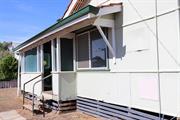
88 White St Brookton
Brookton
Wheatbelt
Constructed from 1950
| Type | Status | Date | Documents | More information |
|---|---|---|---|---|
| (no listings) |
| Type | Status | Date | Documents |
|---|---|---|---|
| RHP - Does not warrant assessment | Current | 29 Nov 2019 |
| Type | Status | Date | Grading/Management | More information | |
|---|---|---|---|---|---|
| Category | Description | ||||
| (no listings) |
|
||||
• The place is associated with the provision of rental housing to Aboriginal tenants by the State government in the post War period.
• The place is associated with the development of the Brookton area during a period of prosperity in the agricultural sector following WWII.
A single storey detached 3 bedroom dwelling on a 1010.9sqm residential lot. The residence includes a kitchen, lounge room, bathroom, a laundry and a water closet. There is a verandah to the front elevation. The house is constructed of compressed fibre panels with a tiled roof, with internal plastered walls and ceilings throughout. There is vinyl flooring throughout the passageways, bedrooms and kitchen. The laundry, water closet and bathroom are of tiled flooring. The door and window frames are of timber construction. In the lounge room, the fireplace is of brick construction with a timber mantelpiece.
From the 1950s, outside influences, sound farming methods and responsive soils, contributed to a period of optimism and unprecedented progress in the Brookton area. Booming wool prices due to the Korean War, coupled with good grain prices and excellent seasons were all bonuses to the farming community.
The new prosperity was reflected in the whole community with increased rural spending creating further employment. It was also a period of unparalleled expenditure on community facilities. Improvement in transport methods by the way of better cars and roads, also enabled more people to participate in community activities. As a result, there was a demand for new facilities and many new buildings were constructed in this period, including: CWA (1954); Bowling Club and green (1954); Roman Catholic Church (1955); Hall (1956); Post Office (1958); Roads Board Office (1959); Fire Brigade headquarters (1959), and a Swimming Pool (1960).
Individual Building or Group
This information is provided voluntarily as a public service. The information provided is made available in good faith and is derived from sources believed to be reliable and accurate. However, the information is provided solely on the basis that readers will be responsible for making their own assessment of the matters discussed herein and are advised to verify all relevant representations, statements and information.